




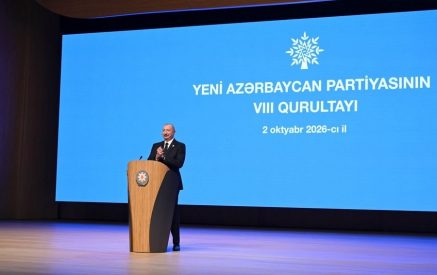






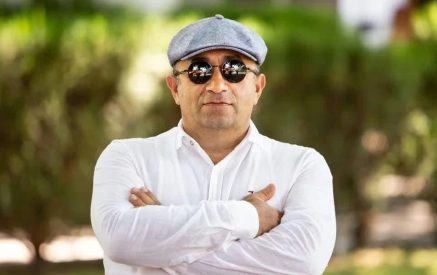




The issue of the so-called return of the so-called Western Azerbaijanis must become part of the discussions within the peace process between Armenia and Azerbaijan. This statement was made by Azerbaijani Majlis deputy, member of the ruling party, and head of the public initiative called “Western Azerbaijan,” Aziz Alekberli.
Is there anyone in Armenia for whom his statement could be unexpected or surprising? If yes, then that person, while physically being in Armenia, has probably long been elsewhere in mind and spirit. Official Baku has long been openly promoting the project of the so-called “Western Azerbaijan,” and moreover at the highest official level.
Of course, at the same high level, Yerevan declares that no such issue exists. The only thing is that it declares this in response to concerns voiced by Armenia’s opposition and various public circles, rather than in response to Azerbaijan. For example, no reaction whatsoever came from Yerevan when recently, during a conference organized in Ordubad of Nakhichevan bordering Armenia on the topic of “Western Azerbaijan,” Azerbaijan’s Minister of Education and Science declared this phantom called “Western Azerbaijan” a strategic priority, including in matters of Azerbaijani identity and youth education.
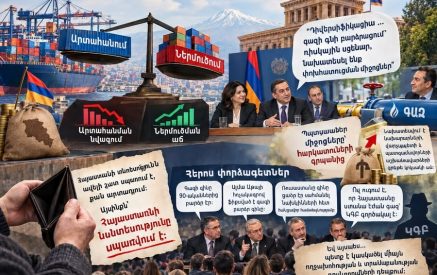
In fact, a member of the Azerbaijani government is declaring that claims toward Armenia are for them a matter reaching even the level of identity. And for official Yerevan, it is a matter of silence. We know that Nikol Pashinyan says that if we remain silent, Azerbaijan will not speak either. In this sense, I recalled the period of the global economic crisis of 2008–2009. At that time, Armenia’s government said that if we do not speak about the crisis, then the crisis will not know where we are. The crisis, of course, was sufficiently informed, and despite the silence, it learned where Armenia was, and Armenia recorded one of the highest economic decline rates in the world during that period — more than 14 percent.
Read also
Now Nikol Pashinyan is also de facto saying that if we do not speak, Aliyev will not know “our place.” But as it turns out, Aliyev “knows our place,” and periodically speaks about the so-called “return of Azerbaijanis” — personally or through the lips of his subordinates — so that he never forgets “our place” until he settles Azerbaijanis among us.
Moreover, he acts not only openly, but also with quite a long-term approach. And this indicates that he is confident in the agenda he voices, viewing it in general as a condition for peace. And when Yerevan has only one response to all this — silence — then this is the case when silence is a sign of consent, not diplomatic skill.
Hakob BADALYAN