







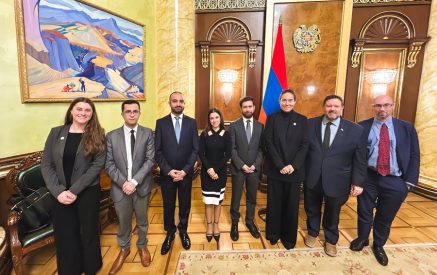










The Fact-Finding Report (hereinafter, the “Report”) was prepared by the Committee for the Rights of Persons Persecuted on Political Grounds [1] (hereinafter, the “Committee”), established on 14 July 2026, with the aim of presenting both to the Armenian public, and the domestic and international institutions, with a comprehensive and objective picture of the ongoing political developments in Armenia, to the extent possible.
Executive Summary
This Report documents patterns of apparent politically motivated human rights violations in the Republic of Armenia during June–July 2026 period. The facts are assessed in light of the Constitution of the Republic of Armenia and Armenia’s international obligations as a State Party to the Universal Declaration of Human Rights (UDHR), the International Covenant on Civil and Political Rights (ICCPR), the European Convention on Human Rights (ECHR), and other related instruments.
The main concerns identified during the reporting period relate to the following:
Read also
- Deaths in the detention facilities and lack of timely access to medical care;
- Systematic display of degrading treatment during arrests (disproportionate use of handcuffs, forcing unresisting persons to the ground, filming such actions);
- The use of pre-trial detention as a rule rather than an exceptional measure in relation to opposition political figures;
- Restrictions on visits and contacts with family members, including minors;
- Obstacles to the effective exercise of the right to defense;
- Fair-trial guarantees, including issues related to the assignment of cases and judicial independence;
- Restrictions on the right of prominent opposition figures to leave the country;
- Conducting searches in early morning hours and interference with the right to privacy;
- Dismissals from employment of academics and public-sector employees known for their critical views;
- Pressure on the Armenian Apostolic Holy Church and members of the clergy, controversial amendments to the electoral legislation, and disputing the election results;
- Actual deprivation of property of an opposition leader;
- Manifestations of dissemination of hate speech and hostility based on political or religious views and place of residence.
Individual cases, considered in combination with each other, point to a broader pattern rather than isolated incidents which raises concerns regarding the situation with the rule of law, separation of powers, and political pluralism in the country. Moreover, the Constitutional Court has also noted that the parliamentary candidates subjected to criminal prosecution were exclusively representatives of the opposition.
The Committee calls upon the authorities of the Republic of Armenia and the judiciary, and urges the international partners to implement the measures set out in the concluding section of this Report.
Scope and Purpose of the Report
This Fact-Finding Report is based on materials examined by the Committee, media reports, the Report on Political Repressions Preceding the Elections, published on 18 June 2026[2], information provided by the political parties, as well as information concerning new cases recorded in the post-election period.
The Report primarily covers the period of June–July 2026. Its purpose is to examine the persistence of the patterns of repression documented during the pre-election period and their effect on democratic institutions, the separation of powers, the right to fair trial, freedom of expression, political participation, and other fundamental human rights and freedoms.
Methodology and Sources
The Report was prepared on the basis of publicly available and verifiable sources. Each factual assertion is accompanied by a reference to the relevant source in the footnotes.
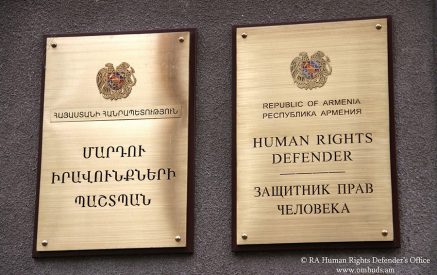
The sources used include court decisions and publications concerning court hearings, statements and findings from monitoring visits by the Human Rights Defender, official statements by state bodies, statements by political forces and defense lawyers, as well as publications by established media outlets.
Where a claim is based on a single source or is disputed by one of the parties, this is expressly indicated. Wherever possible, information has been cross-checked against independent sources for verification purposes. The Report consistently distinguishes between established facts, on the one hand, and claims, assessments, or assumptions, on the other. Where an official position or version presented by law-enforcement bodies or other state institutions was available, it has also been included in the Report.
The cases included were selected on the basis of the following criteria: they became publicly known during the reporting period and raise concerns regarding Armenia’s compliance with the above-mentioned international obligations. The list of the cases presented in the Report is not exhaustive.
The facts are assessed in light of the UDHR, the ICCPR, the ECHR and its Protocols, the Convention on the Rights of the Child, the Convention against Torture and Other Cruel, Inhuman or Degrading Treatment or Punishment, as well as the relevant standards of the OSCE/ODIHR and the Council of Europe Venice Commission, and the Constitution of the Republic of Armenia. The principal applicable legal standards are identified at the beginning of each section.
The Report covers the period of June–July 2026, while in certain cases referrs to events outside that period where necessary to provide context. The information provided is current as of the beginning of August 2026.
This document assesses the compliance of the actions by the state authorities with applicable human rights standards and does not prejudge the criminal guilt or innocence of any individual.
Political Context
The public sphere has generally been characterized by steadily increasing tensions, deepening of dissatisfaction, lack of sense of security and growing concerns in this regard, as well as an increase in aggressive conduct, including more frequent incidents of violence. The authorities have contributed to the formation of such an environment through their domestic and foreign policies, rhetoric that has often inflamed public sentiment and subsequent actions by law-enforcement and security bodies.
Domestic political tensions have also been aggravated by Prime Minister Nikol Pashinyan’s harsh and, at times, threatening public statements concerning political opponents, courts, and judges. Given the status of the official making these statements and the actions subsequently undertaken by law-enforcement bodies, such statements have been perceived as explicit instructions directed at law-enforcement and judicial bodies, rather than political rhetoric, thus further deepening feelings of injustice, impunity, and fear among the public.
During 2025 and in the months preceding the 7 June 2026 National Assembly elections, numerous cases were recorded involving criminal prosecutions, searches, detention, dismissals from employment, and administrative and economic pressure against opposition political figures, civil society activists, journalists and media outlets, lawyers, members of the academic community, the Catholicos of All Armenians, and the clergy of the Armenian Apostolic Holy Church.
The general atmosphere prevailing during the pre-election period, together with threatening statements made by the Prime Minister about his competitors during the campaign, restricted citizens’ ability to freely express their electoral will and raised concerns about free and fair elections, and its transparency, thereby questioning the legitimacy of its outcome.
ANALYSIS OF THE FACTS BY THE RIGHTS VIOLATED
Every Human Being Has the Inherent Right to Life
Applicable standards: Constitution of the Republic of Armenia, art.24; UDHR, art. 3; ICCPR, art. 6; ECHR art. 2.
On 31 July 2026, information concerning the deaths of 27 persons in the Armenian penitentiary institutions in the period of 2025–2026[3] was published in the media. Ten of those deaths were reported as suicides, while 17 detainees died as a result of health conditions which, in many cases, were reportedly manifestly incompatible with continued detention. Moreover, many of those who died in detention had not even been convicted and were being held in pre-trial detention. Of particular concern is the fact that both the judges who ordered detention and the medical staff of the penitentiary institutions were aware of the illnesses.
Despite the legal safeguards in place, they are reportedly often not applied, or required medical interventions are carried out only after considerable delay due to bureaucratic hassle involving the “Penitentiary Medical Center” State Non-Commercial Organization[4], as a result of which the detainees are deprived of medical care necessary to ensure their right to life. The frequency of such cases questions their intentionality, which, in its turn, can be viewed at from the perspective of torture.
During the reported period alone, concerns were raised regarding the health of Andranik Tevanyan, leader of the “Mother Armenia” Party and number two on the electoral list of the “Prosperous Armenia” Party, who has been held at the “Yerevan-Kentron” Penitentiary Institution since 23 May 2026[5]. On 20 July 2026, his health deteriorated sharply. Although his condition was described as critical, no ambulance was called claiming that his condition had subsequently stabilized. On 22 July 2026, the court, nevertheless, extended his detention for a further two months. According to the information available to the Committee, A. Tevanyan had not suffered from serious health problems prior to his detention.
On 17 July 2026, the legal team representing Gyumri Mayor Vardan Ghukasyan informed the court that he urgently required surgery.[6] According to the defense team, an application concerning the surgery and related medical examinations had been submitted to the Penitentiary Medical Center several weeks earlier. However, by the date of the court hearing, no response was received and no action was taken, thereby placing at risk the health of V. Ghukasyan, who already suffered from serious health problems. At the hearing, the public prosecutor requested that Vardan Ghukasyan’s detention be extended for another three months. By the court decision, however, the preventive measure was replaced with three months of house arrest, bail in the amount of AMD 15 million, and a prohibition on leaving the country[7].
The seriousness of the issue was illustrated particularly starkly by the case of 53-year-old Armen Hovhannisyan. On 16 May 2026, he was arrested for tearing down an election campaign poster of the ruling “Civil Contract” Party and taken to a detention facility, after which he was transferred to a psychiatric hospital.[8] Several hours later, Armen Hovhannisyan was found hanged. The actions of the law-enforcement authorities raise serious questions regarding legality and lawfulness therein, as criminal proceedings had been initiated in relation to a conduct constituting an administrative offence, contrary to the explicit requirements of the Armenian legislation, which resulted in loss of life.
Two months after the incident, the media outlet Factor.tv reported that the investigation into Armen Hovhannisyan’s death by suicide was suspended on the grounds that no accused person was identified.[9]
No One Shall Be Subjected to Torture or to Cruel, Inhuman or Degrading Treatment or Punishment
Applicable standards: Constitution of the Republic of Armenia, art. 26; UDHR, art.5; ICCPR, art.7; ECHR, art. 3; UN Convention against Torture.
Under the current authorities, not only the use of handcuffs during arrest without adequate justification of necessity, but also forcing unresisting persons to the ground, filming it and subsequently making the footage public have become a recurring practice in politically sensitive cases. In a society where personal dignity and reputation are particularly valued, such treatment is widely perceived as degrading.
On 6 July 2026, two days after the Constitutional Court delivered its decision on the dispute of the results of the 7 June 2026 National Assembly elections, Gagik Tsarukyan, the leader of the “Prosperous Armenia” Party, was arrested. The arrest was carried out as part of a large-scale law-enforcement operation. Publicly circulated footage showed the 70-year-old Tsarukyan, who was not resisting, being forced to the ground while officers attempted to place him in handcuffs. The manner in which the arrest was carried out raised questions concerning the necessity and proportionality of the force used and respect for his dignity. Handcuffs were again used when he was subsequently transported for investigative actions.[10] The deliberate degrading nature of the treatment is further suggested by reports that the handcuffs were too small for his wrists and, therefore, could not effectively serve as a restraint. The matter has been taken up for examination by the Human Rights Defender of the Republic of Armenia,[11] although no public report has yet been issued.
The use of handcuffs as a form of degrading treatment is particularly apparent in cases when a person voluntarily presents himself to the penitentiary institution, nonetheless, he is initially refused entry, and is admitted only after being handcuffed and filmed. One recent obvious instance was registered with the parliamentary candidate Andranik Tevanyan.[12]
Of particular concern is the fact that during the first week of A. Tevanyan’s detention, a strong light remained switched on in his cell day and night, which could be considered as torture. Despite his requests that the light be switched off at night, no action was taken. The issue was resolved only following intervention by the Human Rights Defender.
Anyone Arrested or Detained on a Criminal Charge Shall Be Entitled to Trial Within a Reasonable Time or to Release. It shall not be the general rule that persons awaiting trial shall be detained in custody.
Applicable standards: ICCPR, art.9; ECHR, art. 5.
Keeping persons awaiting trial in detention, and repeatedly extending detention on the stated ground that they may obstruct the investigation has become a recurring practice under the current authorities. Currently, in nearly all cases under preliminary investigation involving individuals associated with political opposition, the accused have remained in detention for months or under house arrest, whenever the preventive measure has been modified.
According to the World Prison Brief, nearly half of all persons held in Armenia’s prison system—48.1%—are in pre-trial detention and have not yet received a final judgment.[13] In 2015, this figure stood at 28.7%, meaning that the share of pre-trial detainees has increased by 19.4 percentage points compared to 2015.[14] By comparison, the proportion of pre-trial detainees is 23.3% in neighboring Georgia and 20.8% in Azerbaijan.[15]
At the same time, according to the Council of Europe’s SPACE I 2025 penal statistics, as of 31 January 2025, persons in pre-trial detention constituted 52% of the total prison population in Armenia. By this indicator, Armenia ranked fifth from the bottom among Council of Europe member states. By comparison, the figure was approximately 20% in Georgia and 21% in Azerbaijan.[16]
On 24 June 2026, Avetik Chalabyan, coordinator of the “Hayaqve” National Civic Union, who had expressed support for the “Strong Armenia” Party, was remanded in custody for two months. Chalabyan was charged with preparation to obstruct the voting rights of a group of persons.[17]
On 9 July 2026, Aregnaz Manukyan, a board member of the “Mother Armenia” Party, former Member of Parliament, and parliamentary candidate on the electoral list of the “Prosperous Armenia” Party, was arrested and subsequently remanded in custody. Her arrest followed a search of her residence several weeks earlier, on 12 June 2026, and an interrogation conducted immediately thereafter.
On 22 July 2026, the detention of Andranik Tevanyan, leader of the “Mother Armenia” Party and number two on the “Prosperous Armenia” electoral list in the 7 June 2026 parliamentary elections, was extended for a further two months.
Criminal proceedings and restrictive measures previously initiated against leaders, members, and supporters of the opposition “Strong Armenia” Alliance also continued during the post-election period.
On 9 July 2026, the Anti-Corruption Court extended the house arrest for the alliance leader Samvel Karapetyan for a further two months and maintained the restrictions previously imposed on his communications and contacts.[18] The court justified the extension, inter alia, by noting that a number of witnesses had not yet been questioned.The defense, however, argued that maintaining house arrest throughout the investigation of a case comprising more than 130 volumes could not be justified solely by the fact that certain witnesses had not yet been questioned.
On 31 July 2026, the detention of Alik Aleksanyan, co-founder of the “Strong Armenia” Party, was extended.[19] According to his lawyer, no investigative action involving Aleksanyan had been carried out during approximately two months. Nevertheless, the investigating authority had justified his detention by referring to numerous planned investigative actions and the alleged risk that he might obstruct them.
Davit Ghazinyan, a parliamentary candidate of “Strong Armenia” Alliance and former Director and Acting Director of Electric Networks of Armenia (ENA), was arrested on 18 June 2026 and remanded in custody for two months at the request of the Anti-Corruption Committee. On 24 July 2026, the court lifted his detention as a preventive measure following his acquisition of the status of Member of Parliament. It is noteworthy that despite clear statutory requirements, the prosecutor was objecting to lifting the preventive measure and requesting that it be replaced with bail of AMD 1 billion.[20]
In the same case, the detention of Arman Sargsyan was replaced with house arrest for a period of three months. The house arrest of Liliya Sargsyan and Arsen Melikyan was extended for three months each.[21]
On 2 July 2026, retired Colonel Edik Maloyan was arrested. According to media reports, he is also a supporter of the “Strong Armenia” Party.[22] By the court decision, Edik Maloyan was remanded in custody for two months.
According to the official version presented by the Investigative Committee, Maloyan induced an officer with state secret clearance to disclose confidential information and subsequently published the data allegedly obtained unlawfully.
On 6 June 2026, the day preceding the election and designated under the Armenian legislation as the silence period, the law-enforcement bodies carried out actions at the residence of Armen Ashotyan, Vice-President of the Republican Party of Armenia. He was subsequently arrested and remanded in custody for one month.[23]
Ashotyan’s arrest took place on a day when election campaigning was prohibited, yet information concerning his arrest and other criminal proceedings was widely disseminated through the media and social networks. Opposition circles described this as an attempt to influence public sentiment on the eve of the elections and to discourage political activity.
The defense and Ashotyan’s political associates characterized his arrest and detention as politically motivated, linking it to the criticism he had voiced the previous day, on 5 June 2026, during a live social-media commentary on the main pre-election debate, in which he criticized statements made by Prime Minister Nikol Pashinyan. The fact that he was arrested the following day has been cited by his supporters as an additional indication of a possible political motive. According to his lawyers, Ashotyan was arrested in connection with a case dating back ten years, in which no investigative action was carried out for a considerable period of time; the only and most recent interrogation has reportedly taken place at the end of 2019. On 30 July 2026, by the decision of the Anti-Corruption Court of Appeal, Ashotyan’s detention was replaced with house arrest,[24] which was subsequently extended for a further one month.[25]
On 31 July 2026, the court extended the house arrest of Artur Sargsyan, a Member of the ninth convocation of the National Assembly elected on the list of the “Armenia” Alliance, in violation of the parliamentary immunity as guaranteed by Article 96 of the Constitution of the Republic of Armenia and Article 108 of the Constitutional Law on the Rules of Procedure of the National Assembly, as well as the relevant provisions of the Constitutional Court’s decision on the matter.
Within the criminal case publicly referred to as the “Case of the 18 Innocents”, Archbishop Bagrat Galstanyan, Member of Parliament Artur Sargsyan and Vahagn Chakhalyan, members of the “Sacred Struggle” movement, continue to remain under house arrest.
On 7 June 2026, the day of the National Assembly elections, opposition public figure Karapet Poghosyan was arrested,[26] and detention was imposed on him as a preventive measure. He remained in detention for two months. At the expiry of that period, the court rejected the investigator’s motion to extend his detention, and the preventive measure was replaced with a written undertaking not to leave the country.[27]
All Persons Deprived of Their Liberty Shall Be Treated with Humanity and with Respect for the Inherent Dignity of the Human Person
Applicable standards: the Constitution of the Republic of Armenia, art. 26.3; ICCPR, art. 10; ECHR, art. 3; the UN Nelson Mandela Rules.
Concerns regarding the conditions in which persons deprived of liberty are held have been the subject of discussion for many years. These concerns have been exacerbated by overcrowding in penitentiary institutions, which is linked to the excessive use of detention, with deprivation of liberty frequently imposed as a preventive measure instead of alternative measures. The situation is further aggravated by delays in judicial proceedings, as cases often remain pending for prolonged periods and individuals consequently spend extended length of time in detention before judgment. Existing prison infrastructure does not always meet contemporary standards, further worsening detention conditions and, in some cases, contributing to physical and psychological health problems.
On 24 July 2026, upon the instruction of the Human Rights Defender, representatives of the Defender’s Department for the Prevention of Torture and Ill-Treatment, acting as the National Preventive Mechanism (NPM),[28] conducted unannounced monitoring visits to detention facilities at the Masis and Artashat divisions of the Police of the Ministry of Internal Affairs.[29] The representatives examined the conditions in which persons deprived of liberty were held, the extent to which their rights were ensured, and compliance with applicable standards. They also reviewed the provision of food, medical care and services, communication with the outside world, and other matters relevant to the protection of human rights. During the monitoring visit, the representatives also examined temporary holding cells for persons deprived of liberty at court premises, including their physical conditions, furnishings and sanitary and hygienic standards, as well as the provision of food, access to legal assistance, and other matters relating to the exercise of detainees’ rights.
On 20 July 2026, following a visit to the Goris Penitentiary Institution, representatives of the Human Rights Defender’s Office recorded that the physical conditions of the facility did not comply with applicable international standards.[30]
Serious concerns regarding humane treatment also arise from what has reportedly become a recurring practice of depriving detainees of visits with family members, particularly their minor children and elderly parents. During the reporting period, Andranik Tevanyan, Aregnaz Manukyan,[31] Avetik Chalabyan, and others were denied the right to meet with their minor children.[32]
Another matter of concern is that, in the case of almost all detained persons holding opposition views, visits by Members of the National Assembly have also been prohibited. This prevents MPs from responding promptly and effectively to existing or emerging problems concerning the conditions and rights of detainees.[33]
Rights of the Child
Applicable standards: Constitution of the Republic of Armenia, art. 37.3; Convention on the Rights of the Child, art. 3 and 9; ICCPR, art. 24.
Restrictions on communication between detained persons and their minor children must likewise be based on specific and individualized reasons, taking into account not only the detained person’s right to family life but also the best interest of the child. Such restrictions may cause additional suffering to the child, amounting to serious violation of the child’s rights and potentially constituting psychological torture both for the parent and the child.
Particularly concerning is the restriction imposed on Aregnaz Manukyan, a parliamentary candidate on the electoral list of the “Prosperous Armenia” Party. She was denied not only in-person contact with her daughter, but also telephone communication with her. The Human Rights Defender arranged for a psychologist to work with Aregnaz Manukyan’s minor daughter: the psychologist concluded that the child’s psychological difficulties could worsen.
Every State Undertakes to Ensure an Effective Legal Remedy
Applicable standards: Constitution of the Republic of Armenia, art. 61; ICCPR, art. 2.3 and 14.3; ECHR, art. 6.3 and 13.
On 22 July 2026, investigators removed Yerem Sargsyan, lawyer for the leader of “Prosperous Armenia,” from the proceedings. Gagik Tsarukyan’s legal team stated that “at this stage, we must record both the unlawful acts that have taken place and the fact that, by every possible and impossible means, Mr. Tsarukyan is being deprived of his right to an effective defense.”[34]
There have been frequent cases in which lawyers have not been allowed to enter premises being searched or to gain access to persons undergoing questioning, or where insufficient time has been provided to summon a lawyer.
On 6 July 2026, at the beginning of the searches conducted at the house of the “Prosperous Armenia” leader Gagik Tsarukyan, lawyers were prevented from entering the premises for a considerable period of time.[35]
A similar pattern was observed in the actions taken against Andranik Tevanyan, Aregnaz Manukyan, and Yervand Bozoyan, representatives of the “Mother Armenia” Party. These actions included searches of the offices and residences, problems related to the presentation of judicial authorizations, restrictions on video recording, insufficient time to summon a lawyer, and interrogation conducted immediately following the searches.
These circumstances may have restricted the individuals’ ability to obtain effective legal assistance, monitor the conduct of the searches, and organize an adequate legal defense.
Everyone Has the Right to a Fair Trial
Applicable standards: Constitution of the Republic of Armenia, art. 63; UDHR, art. 10 and 11; ICCPR, art.14; ECHR, art. 6.
The basis for a fair trial is the examination of a case by a fair and impartial judge. A group of judges has emerged who tend to carry out the wishes of the authorities and have been labeled by the public as “heart’s judges” (“favourite judges”).[36]
The electronic case-ascription system is not operational at the Court of First Instance, and cases are assigned to the judges by the president of the Court. By a remarkable coincidence, politically sensitive and high-profile cases are assigned to judges who follow the authorities’ preferences when passing decisions on detention. Once a particular judge is assigned, defense lawyers often state that an objective examination of the case is virtually impossible and predict in advance both the imposition of detention and its subsequent extension. Such judges occupy relatively low positions in judicial rating tables,[37] which, according to critics, undermines confidence in the justice system as a whole.
Everyone Charged with a Criminal Offence Shall Be Presumed Innocent Until Proven Guilty According to the Law
Applicable standards: Constitution of the Republic of Armenia, art. 66; ICCPR, art.14.2.
In the context of safeguarding the presumption of innocence, the European Court of Human Rights has noted that an aggressive media campaign may, in certain circumstances, prejudice the fairness of proceedings by influencing public opinion and, consequently, potentially affecting the court’s assessment of the accused person’s guilt.
According to defense lawyers, the principle of the presumption of innocence is being undermined in cases perceived as serving political objectives. Defense teams have repeatedly raised concerns about dependent judges, the imitation of justice, pressure based constraints on judges, the termination of the powers of judges perceived as independent, and other related problems.[38]
From the perspective of the presumption of innocence, concerns also arise in politically sensitive cases from the publication of audio recordings and from statements by public officials asserting or implying the guilt of persons under prosecution.
One of the most prominent examples of the latter occurred on 20 May 2026, during the election campaign, when Prime Minister Nikol Pashinyan publicly stated that a crime report should be submitted and criminal proceedings initiated in relation to Andranik Tevanyan, Chairman of the “Mother Armenia” Party and number two on the electoral list of the “Prosperous Armenia” Party.[39]
Immediately thereafter, the National Security Service and the Investigative Committee took concrete steps towards realizatoin of the actions outlined in the Prime Minister’s statement.
Everyone Has the Right to Leave Any Country, Including Their Own
Applicable standards: Constitution of the Republic of Armenia, art.40.2; UDHR, art.13; ICCPR, art. 12; ECHR Protocol 4, art.2.
The threat voiced by the leader of the ruling political force during the election campaign to restrict the freedom of movement of key political opponents was put into effect by law-enforcement bodies immediately after the 7 June 2026 election, thus corroborating that the measures were politically directed and motivated.
On 15 May 2026, during a Civil Contract rally in Armavir, Prime Minister Nikol Pashinyan referred to his political opponents as a “three-headed mafia” and stated: “They will dream of having the opportunity to flee Armenia, and they will not have that opportunity.”[40]
On 9 June 2026, law-enforcement officers prevented Gagik Tsarukyan, leader of the “Prosperous Armenia” Party, from leaving the Republic of Armenia through Zvartnots International Airport. Criminal prosecution was subsequently initiated against him under Article 290(3)(2) of the Criminal Code, and a prohibition on leaving the country was imposed as a preventive measure.[41] Following the conclusion of the proceedings before the Constitutional Court challenging the election results, measures were initiated to place G. Tsarukyan in detention and deprive him of property.
On 15 June 2026, Robert Kocharyan, leader of the “Armenia” Alliance and the second President of the Republic of Armenia, was prohibited from leaving the country.[42] Earlier, the Office of the Second President had issued a statement indicating that Robert Kocharyan was scheduled to leave Armenia on 14 June 2026 for a long-planned three-day private visit. On 16 June 2026, new criminal proceedings were instigated against him on charges of abuse of official position and money laundering. The Central Electoral Commission (CEC) gave its consent to the prosecution, granting a motion submitted by the Prosecutor General’s Office.
On 12 June 2026, Narek Karapetyan, number one on the electoral list of the “Strong Armenia” Alliance, was also prevented from leaving Armenia.[43] Narek Karapetyan stated that he had intended to travel to the Upper Lars border crossing in order to document the accumulation of Armenian trucks there, which, according to him, had resulted from Russian bans and restrictions on the import of numerous Armenian goods. He stated that Armenian border guards did not allow him to leave the territory of the Republic of Armenia. In response to media inquiries, the investigative authorities stated that they had not imposed any restriction on Narek Karapetyan’s departure from the country.[44] On 22 July 2026, criminal prosecution was instigated against Narek Karapetyan[45], the first in the ‘Strong Armenia’ electoral list, whereas the Prosecutor General’s Office declined to disclose details concerning the case. On 23 July 2026, a prohibition on leaving the country and bail in the amount of AMD 1 billion were imposed on him as a preventive measure.[46]
No one shall be subjected to arbitrary or unlawful interference with his privacy, family, home or correspondence, nor to unlawful attacks on his honour and reputation.
Applicable standards: Constitution of the Republic of Armenia, art.31 and 32; UDHR, art.12; ICCPR, art.17; ECHR, art.8.
Under the current authorities, the practice of conducting searches in the early morning hours has become widespread, causing additional psychological distress, particularly to elderly and minor members of the families. Moreover, such actions are often accompanied by a failure to present, properly and in a timely manner, the judicial decision authorizing the search, as well as by obstacles to contacting a lawyer. In almost all cases, mobile phones are seized.
On 22 May 2026, a search was conducted at the office of the “Mother Armenia” Party within the framework of the case instigated against party leader Andranik Tevanyan, number two on the electoral list of the “Prosperous Armenia” Party. According to party representatives, law-enforcement officers initially did not present the search warrant and restricted video recording of the operation. The search was conducted in different parts of the office simultaneously, making it difficult to monitor its course. According to the defense, Andranik Tevanyan was also not given sufficient time to call a lawyer and wait for the lawyer’s arrival.
On the same day, in Tevanyan’s absence, representatives of the investigative authority and the National Security Service entered the apartment belonging to him, depriving him of the opportunity to monitor their actions.
On 12 June 2026, a search was conducted at the residence of Aregnaz Manukyan, a member of the “Mother Armenia” Party and a candidate included on the electoral list of the “Prosperous Armenia” Party. According to Manukyan and her lawyer, the decision setting out the legal grounds for the search was not presented at the beginning of the operation, and video recording was restricted before they had been able to review it.[47] Although a lawyer participated in the search, the defense stated that insufficient time had been provided for prior consultation and preparation of the defense position.
On 3 July 2026, a search was also conducted at the residence of Yervand Bozoyan, a board member of the “Mother Armenia” Party.[48] According to the defense, he was not given a reasonable opportunity to call a lawyer and wait for the lawyer’s arrival. Immediately after the search, Bozoyan was summoned for questioning without sufficient time for proper consultation with his lawyer.
On 6 July 2026, as part of the large-scale law-enforcement operation against Gagik Tsarukyan, leader of the “Prosperous Armenia” Party, an early-morning search was conducted at his house, while lawyers were prevented from participating in the proceedings for a considerable period of time. During the search, animals belonging to the Tsarukyans were also seized without adequate arrangements being made for their care and safe transportation. It was reported that one of the rare white lions did not regain consciousness after being sedated for transportation. Animals and objects with no apparent connection to the investigation, including stuffed animals, were also seized.
Searches were conducted at “Multi Group Concern”, its affiliated companies, and the residences of their managers, at more than 70 addresses in total. As a result, the activities of several enterprises were suspended or significantly restricted.
Sports facilities were also sealed, including “Olympavan”, where both Armenian and foreign athletes were preparing for international competitions. According to the published information, thousands of employees faced with forced downtime, while supply disruptions were registered in certain sectors of economy.
On 5 June 2026, investigative actions were carried out at “Armat Media”. Investigators seized the mobile phones of the editorial staff without explanation. The search and seizures were conducted in the absence of the lawyers. According to the editor, officers of the National Security Service and the Investigative Committee entered the editorial offices, prohibited journalists and editors from leaving the room, and prevented them from calling their lawyer. Notably, on 27 July 2026, the Court of Appeal ruled that the search had been unlawful, finding that the rights of Alik Aleksanyan, the owner of the media outlet, had been violated.[49]
In the early morning of 23 July 2026, law-enforcement officers conducted searches at the residence and in the vehicles of Ishkhan Saghatelyan, representative of the Supreme Body of the Armenian Revolutionary Federation (ARF) in Armenia and a Member of Parliament from the “Armenia” Parliamentary Faction.[50] According to Saghatelyan, the factual grounds for the search were not clearly explained to him. Law-enforcement authorities linked the operation to an alleged failure to comply with certain requirements of the Compulsory Enforcement Service, but did not clarify which specific requirements were at issue or how the alleged non-compliance justified the necessity of searching his residence.
On 6 June 2026, the day before the election, law-enforcement officers carried out actions at the residence of Armen Ashotyan, Vice-President of the Republican Party of Armenia, after which he was arrested and brought before the court.
In the early morning of 24 June 2026, a search was conducted at the residence of Avetik Chalabyan, coordinator of the “Hayaqve” National Civic Union, after which he was arrested. Chalabyan’s visits with family members were restricted. According to the defense, the combined use of detention and restrictions on contacts with the family constituted a disproportionate interference with his private and family life.
On 31 July 2026, Liparit Drmeyan, a member of the “Wings of Unity” Party, filed a defamation lawsuit against Prime Minister Nikol Pashinyan over a statement, claiming it to be “untrue” and “damaging to his honor and dignity.”[51] The statement in question was made by the Prime Minister during a press conference on 30 July 2026, when he instructed law-enforcement bodies to launch an investigation against Liparit Drmeyan, former Acting Representative of Armenia on International Legal Matters and a member of the “Wings of Unity” Party in the recent elections, in connection with the arbitration case in which Electric Networks of Armenia (ENA) won the case against the Government.
On the same day, the Prosecutor General’s Office acted on Pashinyan’s announcement.[52] The “Wings of Unity” Party issued a statement concerning the situation involving its member Liparit Drmeyan, stating: “The Prosecutor General’s Office acted on Pashinyan’s announcement almost immediately. Such a prompt response gives rise, at the very least, to a reasonable assumption that this action had been planned and coordinated in advance, further deepening the suspicion that we are dealing with an execution of a political order, rather than independent investigation.” The statement further emphasized that: “In a state governed by the rule of law, drafting a document that contradicts the Government’s position, declining to record the conclusion desired by the Prime Minister, or expressing a different professional opinion does not constitute a criminal offence.”[53]
Everyone Shall Have the Right to Hold Opinions without Interference
Everyone Shall Have the Right to Freedom of Expression
Applicable standards: Constitution of the Republic of Armenia, art.42; UDHR, art.19; ICCPR, art.19; ECHR, art.10.
During the reporting period, information was published concerning alleged politically motivated employment-related and economic restrictions imposed on persons working in educational, state, and municipal institutions.
According to the published information, as of September 2026, the former Human Rights Defender Ruben Melikyan, Associate Professor Alen Ghevondyan, Shushan Vardanyan from the Faculty of History and Professor Khachik Galstyan will no longer teach at the Yerevan State University.
The lecturers concerned are known for their critical views regarding government policies, and the decisions have, therefore, been linked in public discourse to their political position.
Information has also been circulated concerning the decision not to renew the employment contract with Academician Gagik Ghazinyan.[54] He is the father of Davit Ghazinyan, an Member of Parliament from the “Strong Armenia” Faction, and has publicly defended the rights of opposition figures who have come under scrutiny by law-enforcement bodies.
On 13 July 2026, it was reported that obstetrician-gynecologist Arpine Soghoyan had been dismissed from her position on the grounds of staff reduction. She became particularly known following a heated exchange and incident with Prime Minister Nikol Pashinyan in the Arabkir administrative district during the election campaign in May.
According to media reports, a number of employees of the Goris Municipality, including Deputy Mayor Artyom Aghajanyan, were dismissed from their positions. These actions were linked in public reports to the failure to secure sufficient number of votes for the ruling party within the community during the parliamentary elections.
Everyone Shall Have the Right to Freedom of Thought, Conscience and Religion.
Any Advocacy of National, Racial or Religious Hatred that Constitutes Incitement to Discrimination, Hostility or Violence Shall be Prohibited by Law.
Applicable standards: Constitution of the Republic of Armenia, art.17, 18 and 41; UDHR, art.18; ICCPR, art.18 and 20; ECHR, art.9; Law of the Republic of Armenia on Freedom of Conscience and Religious Organizations, art.17 and 18; Law of the Republic of Armenia on Relations between the Republic of Armenia and the Armenian Apostolic Holy Church, art.2.
Since May 2025, the campaign launched by Prime Minister Pashinyan and members of the “Civil Contract” Party against the Armenian Apostolic Holy Church has intensified to an unprecedented degree. As a result, not only members of the clergy but also the Catholicos of All Armenians have been subjected to pressure and prosecution. Government representatives have adopted the practice of referring to the Catholicos of All Armenians and other clergy members by their secular names, which is perceived as a demonstrative act of disrespect toward them and as degrading and offensive treatment toward followers of the Armenian Apostolic Holy Church. Notably, the campaign against the Armenian Church began following the international conference entitled “Religious Freedom: Preserving Armenian Spiritual, Cultural and Historical Heritage in Artsakh/Nagorno-Karabakh,” organized in Bern, Switzerland, on 26–28 May 2025, by the World Council of Churches (WCC) and the Protestant Church of Switzerland, at the initiative of His Holiness Karekin II, Supreme Patriarch and Catholicos of All Armenians.[55]
On 31 July 2026, the media reported that the criminal case involving the Catholicos of All Armenians and six bishops and archbishops who are members of the Supreme Spiritual Council had been sent to the Armavir Court, with the first hearing scheduled for 7 August.[56] The criminal case had been instigated on 14 February 2026, shortly before the Bishops’ Assembly scheduled to take place in Austria, on 16–19 February 2026, and the Catholicos was prohibited from leaving Armenia. On 12 February 2026, a number of representatives of the Armenian Diaspora issued an open letter stating that the “continued attacks on the leadership of the Church and threats of the forced removal of its leader” constituted a direct threat to Armenians throughout the world.[57]
Evidence of political persecution and interference in the internal governance of the Church is also seen in the fact that, the “Civil Contract” Party, in its electoral program for the 2026 National Assembly elections, under what it presented as an agenda of “reform” of the Church, and linking it to narratives of “security and hybrid warfare,” set as programmatic objectives the “removal of the de facto head of the Armenian Apostolic Holy Church” and the “adoption of a Charter of the Armenian Apostolic Holy Church.” These matters fall entirely outside the functions of both the state and a political party.[58]
Moreover, these objectives are inconsistent not only with the Constitution of the Republic of Armenia and the constitutionally recognized status of the Armenian Apostolic Holy Church as the “national church,” but also with the following international standards that Armenia has undertaken to respect and protect, under which the state should not appoint, remove or exert political influence over the leadership of religious organizations:
- Article 18 of the International Covenant on Civil and Political Rights;
- UN Human Rights Committee General Comment No. 22, which protects the autonomy of religious communities;
- Article 9 of the European Convention on Human Rights, and the legal principles established in a number of judgments of the European Court of Human Rights;
- Relevant principles of the OSCE/ODIHR and the Council of Europe’s Venice Commission.
In violation of the clear provisions of the Constitution of the Republic of Armenia and Armenian legislation guaranteeing the autonomy of the Church and non-interference by the state in its internal affairs, criminal proceedings have been instigated against the leadership of the Church. “The Catholicos is being accused of something that falls within the internal jurisdiction of the Church. The European Court of Human Rights has clearly stated in numerous precedent-setting judgments that the state has no right to interfere with the autonomy of the Church,” the lawyer emphasized.[59]
During the period covered by the Report, the preventive measure applied to Archbishop Mikael Ajapahian was modified: he is accused in connection with views expressed in an interview given approximately two years earlier. On 25 June 2026, the Court of Appeal, finding a violation of territorial jurisdiction, overturned the decision of the First Instance Court and transferred the proceedings to the First Instance Court of General Jurisdiction of the Shirak Province. It lifted Archbishop Ajapahian’s house arrest while maintaining the prohibition on leaving the country.[60] Archbishop Mikael was detained on 28 June 2025.[61] On 6 February 2026, his detention was replaced with house arrest. While in detention, he underwent two surgical operations.
On 4 June 2026, by decision of the Court of Appeal, the detention of Archbishop Bagrat Galstanyan, leader of the “Sacred Struggle” movement, was replaced with house arrest.[62] Archbishop Bagrat has been held in detention since 26 June 2025.
Every Citizen Shall Have the Right and the Opportunity, without Any Distinctions and without Unreasonable Restrictions, to Vote and to Be Elected at Genuine Periodic Elections which Shall Be by Universal and Equal Suffrage and Shall Be Held by Secret Ballot, Guaranteeing The Free Expression of The Will of The Electors.
Applicable standards: Constitution of the Republic of Armenia, art.48; UDHR, art.21; ICCPR, art.25; ECHR Protocol 1, art.3.
On 3 July 2026, the National Assembly, with the votes of the “Civil Contract” Party alone, adopted under an expedited procedure the Law on the Amendments to the Electoral Code which may deprive hundreds of thousands of citizens of the opportunity to vote. The draft law was submitted without an opinion from the Venice Commission and, according to its critics, contradicts the Constitution of the Republic of Armenia, which provides that all Armenian citizens aged 18 and over have the right to vote.
In addition to opposition political forces, a number of civil society organizations also characterised the law as unconstitutional, arguing that it restricts electoral rights unlawfully and disproportionately, threatens democratic principles, and obstructs the right of the citizens of the Republic of Armenia to participate in the formation of the public authority.[63] The opposition intends to challenge the law before the Constitutional Court of the Republic of Armenia.
Following the 7 June 2026 National Assembly elections, a number of political forces announced that they did not accept the official election results, citing the use of administrative resources, electoral violations, political pressure, and unequal conditions for political competition.
The decision adopted by the Central Electoral Commission on 14 June 2026 was challenged before the Constitutional Court by seven political parties and alliances. The applicants requested that the election results be declared invalid, that new elections be called, or that the distribution of parliamentary mandates be revised.
The Central Electoral Commission had declared the voting results in three polling stations invalid without ordering repeat voting in those polling stations, although this was required under Armenian legislation. According to the Central Electoral Commission’s assessment, this affected the distribution of mandates. The “Prosperous Armenia” Party fell short of the threshold required for parliamentary representation by 154 votes, while the votes of approximately 60,000 voters from the polling stations concerned were not included in the final results. As a consequence, around 60,000 voters were effectively deprived of the exercise of their electoral rights, while the state failed to take appropriate measures to protect the rights of those citizens, who represented approximately 2.4% of Armenia’s electorate.
During the Constitutional Court proceedings, it was recorded that motions had been submitted to the Central Electoral Commission seeking consent to initiate criminal prosecution and impose deprivation of liberty in respect of 18 parliamentary candidates. Of those, the motions concerning 15 persons had been granted, while three had not yet been considered. Detention had been imposed as a preventive measure on 11 parliamentary candidates, house arrest on three, and administrative supervision on one. Five accused persons had been declared wanted. In addition, 29 criminal cases involving 107 persons had been sent to the competent courts with indictments. It should be noted that all of the persons concerned were representatives of the opposition, which may support the hypothesis that the measures taken against them were politically motivated.
In addition, the Constitutional Court stated the following:
“19.7. The Constitutional Court notes that throughout the entire electoral period, voters are exposed to active flows of information, and the formation of their will is influenced both by statements made by public authorities and their officials and by the manner in which such statements are covered by the media and social networks. In the context of safeguarding the presumption of innocence, the European Court of Human Rights has noted that an aggressive media campaign may, in certain circumstances, prejudice the fairness of proceedings by influencing public opinion and, consequently, the court’s determination regarding the guilt of the accused.
19.8. Taking the above into account, and also noting that public statements concerning the guilt of a candidate included on the electoral list of a political party (or alliance of political parties), or of other participants in the electoral process, may damage their public reputation and create a negative attitude toward the relevant political force (alliance of political parties) or individual, the Constitutional Court considers that, where there is no necessity arising from the purposes of criminal proceedings, law-enforcement bodies should refrain, at least until and including election day, from mentioning in public communications concerning alleged criminal acts and their alleged perpetrators the name of the political force participating in the elections.”[64]
On 4 July 2026, the Constitutional Court dismissed all applications and upheld Decision No. 258-A of the Central Electoral Commission dated 14 June 2026. The Court identified shortcomings in the electoral process but did not consider them sufficient to invalidate the election results.
Right to Property and the Principle of Inviolability of Property
Applicable standards: Constitution of the Republic of Armenia, art.60; UDHR, art.17; ECHR Protocol 1, art.1.
During the election campaign, on 18 May 2026, Prime Minister Pashinyan made threatening statements concerning his principal political opponents and promised to punish them. He stated: “I will cow Rob as well, I will cow Serzh, I will cow the man from Kaluga, and Gago, as well. I will cow your Rob, make him kneel, I will finish him off; I will make your man from Kaluga kneel and finish him off, as well. Take off your masks, you scoundrels, you fugitives. Take off your masks, Rob’s and Serzh’s lackeys, and Gago’s lackeys. I will take off those masks one by one and shove them where they belong.”[65]
At present, a process amounting in practice to the deprivation of property of Gagik Tsarukyan, leader of the “Prosperous Armenia” Party, is underway. Criminal, economic, and property-related measures against Tsarukyan began immediately after the completion of proceedings challenging the election results, in circumstances where the party led by him had failed to enter Parliament by a margin of only 154 votes. As of the date of the Report, the “AraratCement” Plant, the “Multi Wellness” Sports and Health Complex, and the “Ararat Wine, Vodka and Cognac Plant,” all belonging to Tsarukyan or members of his family, had been transferred under state control, while the licence of the “Shangri La Casino” had been suspended.[66]
It should be noted that, before the adoption of the final judicial decisions, political statements referring to the “nationalization” of companies or their “return to the people” may conflict with the presumption of innocence, the protection of property rights, and the principle of separation of powers. Such statements may also give rise to a reasonable perception that the outcome of the legal proceedings has been predetermined by the executive authorities.
The timing and scale of these measures raise concerns that legal mechanisms may have been used to restrict the economic and political capacities of a political opponent, rather than exclusively for legitimate purposes of criminal justice.
CONCLUSION
Taken together, the cases documented during the reporting period reveal a pattern involving the combined use of criminal prosecution, judicial measures, and economic restrictions, directed predominantly against opposition political forces, their leaders and supporters, as well as individuals critical of the authorities, particularly in the period following the 7 June 2026 elections.
Indicators pointing to a possible political motive include the timing of the measures in relation to the electoral process, the selective nature of the persons targeted, the apparent connection between threatening public statements by senior officials and subsequent law-enforcement actions, as well as the fact registered by the Constitutional Court that the parliamentary candidates subjected to criminal prosecution were exclusively representatives of the opposition.
Particular concern arises in relation to fair-trial guarantees, including the transparency of case assignment, judicial independence, the justification for pre-trial detention, and respect for the presumption of innocence in the context of public statements.
Where the existence of risks prescribed by law is not sufficiently substantiated and detention, nevertheless, continues for an extended period, there is a danger that detention may effectively be used as a form of punishment prior to conviction.
The most serious concerns relate to the protection of life and health, including deaths in detention facilities, timely access to medical care, and conditions of detention, as well as the effective protection of the rights to private and family life and to freedom from torture and inhuman or degrading treatment. The incidents documented in this regard pose problems under Articles 6 and 7 of the ICCPR and Articles 2 and 3 of the ECHR.
At the same time, the measures taken against the leadership and clergy of the Armenian Apostolic Holy Church, together with the legal concerns raised in connection with those measures, require particular attention to ensuring respect for the constitutional and statutory boundaries governing relations between the state and the Armenian Apostolic Holy Church.
Taken as a whole, these developments may have a significant restrictive and inhibiting effect on political participation, freedom of expression, and political pluralism. They raise serious concerns regarding respect for the rule of law and the principle of separation of powers.
DEMANDS ADDRESSED TO THE ARMENIAN AUTHORITIES
In light of the above, the Committee emphasizes the urgency of taking the following measures.
To the Authorities of the Republic of Armenia
(Government, Prosecutor General’s Office, investigative and law-enforcement bodies)
- Discontinue criminal prosecutions that appear to be politically motivated and refrain from public statements concerning ongoing proceedings that prejudge the guilt of the persons concerned;
- Ensure timely and adequate medical care for detained persons and conduct effective and independent investigations into all deaths that have occured in places of detention;
- Apply detention as an exceptional measure rather than as a rule, giving preference to alternative preventive measures;
- Improve conditions of detention in penitentiary institutions and reduce overcrowding;
- Eliminate the disproportionate and degrading use of force and handcuffs during arrests;
- Guarantee the effective exercise of the right to defense, including timely access to a lawyer and sufficient time for confidential consultation;
- Restore detainees’ right to visits with family members, particularly minor children, taking into account the best interests of the child;
- Discontinue the abusive practice of early-morning searches and ensure the proper and timely presentation of judicial decisions authorizing searches;
- Respect the autonomy of the Armenian Apostolic Holy Church and ensure compliance with the constitutional and legislative safeguards governing relations between the State and the Church, excluding unjustified interference by state authorities in the internal affairs of the Church.
To the Judicial System and the Supreme Judicial Council
- Ensure random electronic ascription of cases at all levels of the judiciary;
- Guarantee the independence of judges and require proper, individualized reasoning in decisions imposing or extending detention;
- Respect parliamentary immunity in accordance with the decisions of the Constitutional Court.
To the National Assembly
- Bring amendments to electoral legislation into conformity with the Constitution of the Republic of Armenia and the standards of the Venice Commission, ensuring that any restriction on electoral rights is proportionate and, where necessary, obtaining an opinion from the Venice Commission.
To the Human Rights Defender
- Continue monitoring the cases identified in this Report, as well as other similar cases, and publish the relevant findings;
- Reflect human rights violations documented in politically sensitive cases, as well as complaints and reports received in relation to such cases, in reports and communications submitted to international and European institutions.
RECOMMENDATIONS TO INTERNATIONAL PARTNERS
(Council of Europe, European Court of Human Rights, OSCE/ODIHR, Venice Commission, European Union, UN treaty bodies, PACE)
- Continue monitoring and engagement regarding the human rights situation in Armenia through the relevant mechanisms;
- Consider the concerns presented in this Report within the framework of bilateral and multilateral dialogue;
- Incorporate the measures recommended in this Report into reporting on Armenia’s compliance with its international obligations.
ABBREVIATIONS
| OSCE/ODIHR | Organization for Security and Co-operation in Europe / Office for Democratic Institutions and Human Rights |
| PACE | Parliamentary Assembly of the Council of Europe |
| CEC | Central Electoral Commission |
| ECtHR | European Court of Human Rights |
| ECHR | European Convention for the Protection of Human Rights and Fundamental Freedoms |
| UDHR | Universal Declaration of Human Rights |
| HRD | Human Rights Defender |
| ICCPR | International Covenant on Civil and Political Rights |
List of Individuals Persecuted on Political Grounds Included in the Report
| # | Name, Surname | Reference page |
| 1. | Artyom Aghajanyan | 15 |
| 2. | Archbishop Mikael Ajapahian | 17 |
| 3. | Alik Aleksanyan | 7, 14 |
| 4. | Armen Ashotyan | 7, 8, 14 |
| 5. | Yervand Bozoyan | 10, 13 |
| 6. | Vahagn Chakhalyan | 8 |
| 7. | Avetik Chalabyan | 6, 9, 14 |
| 8. | Liparit Drmeyan | 14, 15 |
| 9. | Archbishop Bagrat Galstanyan | 8, 17 |
| 10. | Khachik Galstyan | 15 |
| 11. | Davit Ghazinyan | 7 |
| 12. | Gagik Ghazinyan | 15 |
| 13. | Alen Ghevondyan | 15 |
| 14. | Vardan Ghukasyan | 4 |
| 15. | Armen Hovhannisyan | 4, 5 |
| 16. | Narek Karapetyan | 12 |
| 17. | Samvel Karapetyan | 7 |
| 18. | His Holiness Karekin II, Supreme Patriarch and Catholicos of All Armenians | 16 |
| 19. | Robert Kocharyan | 12 |
| 20. | Edik Maloyan | 7 |
| 21. | Aregnaz Manukyan | 6, 9, 10, 13 |
| 22. | Arsen Melikyan | 7 |
| 23. | Ruben Melikyan | 15 |
| 24. | Karapet Poghosyan | 8 |
| 25. | Ishkhan Saghatelyan | 14 |
| 26. | Arman Sargsyan | 7 |
| 27. | Artur Sargsyan | 8 |
| 28. | Liliya Sargsyan | 7 |
| 29. | Arpine Soghoyan | 15 |
| 30. | Andranik Tevanyan | 4, 5, 6, 9, 10, 11, 13 |
| 31. | Gagik Tsarukyan | 5, 10, 12, 13, 19 |
| 32. | Shushan Vardanyan | 15 |
[1] 14.07.2026, A1plus, https://www.youtube.com/watch?v=bHhetGoChjE
The purpose of the Committee is to document, through fact-finding, cases in which fundamental human rights have allegedly been violated for political reasons, including through persecution, criminal proceedings, deprivation of liberty, dismissal from employment, restrictions on freedom of movement, and other measures.
[2] 18.06.2026, https://csi.am/sites/default/files/ELECTIONS-REPORT-2026.06.17-FINAL.pdf,
https://csi.am/sites/default/files/elections%202026%20report.pdf
[3] https://news.am/hy/news/1052615
[5] https://tert.am/am/news/2026/07/21/andranik-tevanyan/4278078
[6] https://www.youtube.com/watch?v=en-toZEi6O8
[7] https://armenpress.am/hy/article/1255822
[8] https://news.am/hy/video/1036060
[9] https://factor.am/1040843.html
[10] https://yerevan.today/i-dep-tcarukyanin-dzernashghthaner-dardzyal-chein-karoghacel-amracnel-cucadrelu-hamar-ein-mi-kerp-harmarecrel/
[11] https://www.azatutyun.am/a/mip-y-gagik-tsaroukyani-dzerbakalman-tesanyouti-arnchoutyamb-ousoumnasiroutyoun-e-sksel/33799341.html
[12] https://auroranews.am/news/2026-05-23-dzerbakalel-en-andranik-thevanyanin
[13] https://www.prisonstudies.org/country/armenia
[14] https://prisonstudies.org/world-prison-data/highest-lowest/highest-lowest-pre-trial-detainees-remand-prisoners
[15] https://prisonstudies.org/world-prison-data/highest-lowest/highest-lowest-pre-trial-detainees-remand-prisoners
[16] https://www.coe.int/en/web/portal/-/serious-overcrowding-and-increasing-proportions-of-older-and-women-detainees-in-european-prisons
[17] https://www.azatutyun.am/a/chalabyany-kalanavorvets-erkou-amsov/33787934.html
[18] https://hetq.am/hy/article/182605
[19] https://hetq.am/hy/article/182605
[20] https://hetq.am/hy/article/182874
[21] https://www.aravot.am/2026/07/24/1570810/
[22] https://www.aravot.am/2026/07/24/1570810/
[23] https://www.aravot.am/2026/06/06/1561691/
[24] https://www.azatutyun.am/a/ashotyani-nkatmamb-kirarvats-khapanman-mijotsy-pokhvel-e/33818393.html
[25] https://tert.am/am/news/2026/08/04/armen-ashotyan/4279509
[26] https://news.am/hy/news/1041662
[27] https://arm.sputniknews.ru/20260806/datarany-merzhel-e-iravapashtpan-karapet-pvoghvosjani-kalanqy-erkaradzgelu-mijnvordutjuny-105460218.html
[28] Մարդու իրավունքների պաշտպանի մասին ՀՀ սահմանադրական օրենքի հոդված 2.2:
[29] https://ombuds.am/news/3905
[30] https://www.1lurer.am/hy/2026/07/21/1/1548367
[31] https://www.azatutyun.am/a/mip-aregnazin-manoukyani-erekhayi-het-shpvelou-argelk/33809135.html
[32] https://news.am/hy/news/1051213?utm
[33] https://www.azatutyun.am/a/ahazang-banteroum-sahmanapakoumner/33805182.html
[34] https://www.azatutyun.am/a/tsaroukyani-pastabaniheratsrel-en-varouytits/33809934.html
[35] https://arminfo.info/full_news.php?id=102455&lang=1
[36] https://hraparaktv.am/post/52273aede1c50b43c33fad16337fd97a
[38] Interview with lawyer M. Farmanyan on H2 TV’s “ProFact” program
https://www.youtube.com/watch?v=3aGoPaSuQRs&list=PLZ6YCvC786QXvlwrSaR8F4O-nioDuh3Ae&index=8
[39] https://www.facebook.com/share/v/1FVpmu93pP/ (Statement by N. Pashinyan: “You know that Andranik Tevanyan is number two on the Prosperous Armenia Party’s electoral list. Tomorrow, the National Security Service of the Republic of Armenia, in accordance with the established procedure, will submit a crime report to the Investigative Committee, with the expectation that criminal proceedings will be initiated against Andranik Tevanyan under the article concerning high treason, and that we will finally, fully and completely eradicate this espionage network from the Republic of Armenia.”)
[40] https://www.aravot.am/2026/05/15/1557226/ ;
https://www.facebook.com/24news.am/videos/%D6%83%D5%A1%D5%B7%D5%AB%D5%B6%D5%B5%D5%A1%D5%B6%D5%A8-%D5%BD%D5%BA%D5%A1%D5%BC%D5%B6%D5%A1%D6%81-
%D5%A8%D5%B6%D5%A4%D5%A4%D5%AB%D5%B4%D5%B8%D6%82%D5%A9%D5%B5%D5%A1%D5%B6%
D5%A8-%D5%B0%D5%B0-%D5%AB%D6%81-
%D6%83%D5%A1%D5%AD%D5%B9%D5%A5%D5%AC%D5%B8%D6%82-
%D5%B4%D5%A1%D5%BD%D5%AB%D5%B6-
%D5%A5%D6%80%D5%A1%D5%A6%D5%A5%D5%AC%D5%B8%D6%82-%D5%A5%D6%84-
%D5%A2%D5%A1%D5%B5%D6%81-%D5%A1%D5%B6%D5%AF%D5%A1%D5%BF%D5%A1%D6%80-%D5%A7-
/813657744895524/
[41] https://tert.am/am/news/2026/06/09/tsarukyan-gagik/4273468
[42] https://armenpress.am/hy/article/1252988
[43] https://armenpress.am/hy/article/1252988 ; https://news.am/hy/video/1043078
[44] https://www.pastinfo.am/hy/news/2026/06/15/%D5%86%D5%A1%D6%80%D5%A5%D5%AF-
%D4%BF%D5%A1%D6%80%D5%A1%D5%BA%D5%A5%D5%BF%D5%B5%D5%A1%D5%B6%D5%AB-
%D5%A5%D5%AC%D6%84%D5%B6-%D5%AB%D6%80%D5%A5%D5%B6%D6%84-%D5%B9%D5%A5%D5%B6-
%D5%A1%D6%80%D5%A3%D5%A5%D5%AC%D5%A5%D5%AC/1971759
[45] https://www.azatutyun.am/a/33810004.html
[46] https://www.azatutyun.am/a/33810506.html
[47] https://factor.am/1029849.html
[48] https://tert.am/am/news/2026/07/03/ervand-bozoyan/4276106
[49] https://armlur.am/1578765/
[50] https://www.aravot.am/2026/06/23/1565013/ ; https://newsarmenia.am/am/news/armenia/ishkhan-saghatelyani-bnakaranum-ev-avtomeqenanerum-khuzarkutyun-e-katarvum/
[51] https://t.me/armeniasputnik/102236
[52] https://t.me/armeniasputnik/102162
[53] https://t.me/armeniasputnik/102187
[54] https://www.azatutyun.am/a/gagik-ghazinyany-kboghokarki-ir-paymanagiry-dadaretsnelou-oroshoumy/33821013.html
[55] https://www.armenianchurch.org/hy/news/berni-mijazgayin-joghov-27-05-2025/11839
[56] https://www.azatutyun.am/a/katoghikosy-kkangni-datarani-arjev-orpes-meghadryal/33819263.html
[57] https://b24.am/other/452388.html
[58] https://www.civilcontract.am/news-inner/924
[59] https://www.azatutyun.am/a/katoghikosy-kkangni-datarani-arjev-orpes-meghadryal/33819263.html
[60] https://www.aravot.am/2026/06/25/1565530/
[61] https://www.aravot.am/2026/06/25/1565530/
[62] https://www.aravot.am/2026/06/04/1561372/
[63] https://www.azatutyun.am/a/azh-ynddimoutyouny-mtadir-e-sd-oum-vicharkel-arterkroum-aprogh-hh-kaghakatsineri-yntrakan-iravounki-sahmanapakoumy/33795655.html
[64] https://www.concourt.am/decision/decisions/6a4d16c659189_SDV-1835.pdf