



































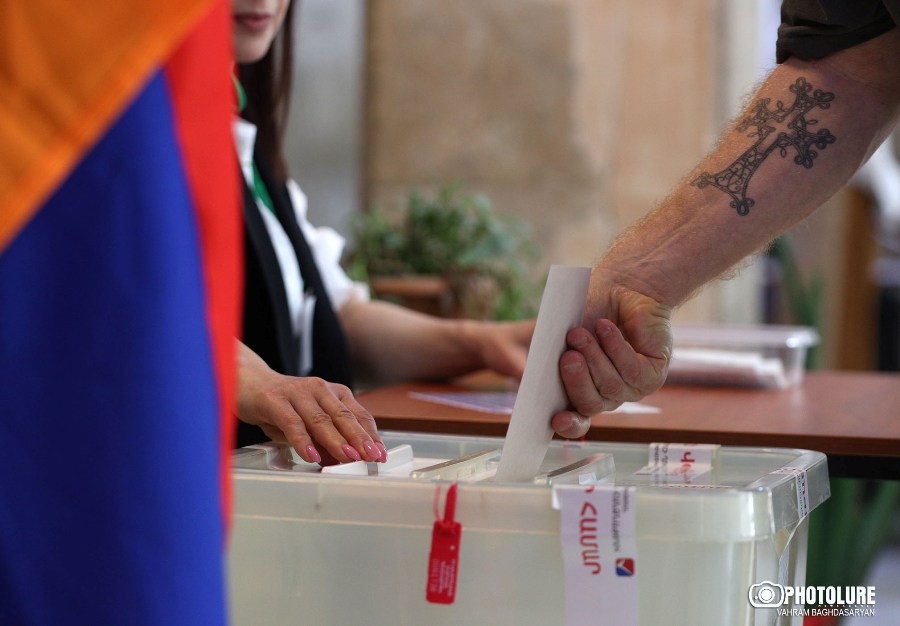
ON THE ISSUE OF PRE- AND POST-ELECTION POLITICAL PERSECUTIONS IN ARMENIA AND THE ELECTION RESULTS
This statement is based on events preceding the decision of the Constitutional Court of the Republic of Armenia of 14 June 2026. The Armenian Center for Political Rights will address individual instances of political persecution in subsequent publications.
PREFACE
In the assessment of the Armenian Center for Political Rights, the composition of the Parliament resulting from the 2026 parliamentary elections was not formed in accordance with the requirements of the Electoral Code of the Republic of Armenia. This assessment is based not only on the serious human rights violations documented during the pre-election period, the selective application of criminal prosecution, and the abuse of administrative resources, but, above all, on the decisions adopted by the Central Electoral Commission (CEC) on 14 June 2026 and by the Constitutional Court (CC) on 4 July 2026. These decisions directly contradict the requirements of the Electoral Code and fundamentally alter the composition of the legislature by entrenching the near-unchecked dominance of a single political party, rather than reflecting the will of the electorate.
Read also
The conduct of law enforcement authorities in responding to alleged electoral violations during both the pre-election and post-election periods was selective and discriminatory. Although there was clear and credible evidence of comparable electoral violations committed in support of the ruling authorities, the activities of the Anti-Corruption Committee (ACC) were directed exclusively against representatives and supporters of opposition political forces.
CONTEXT
The 2026 parliamentary elections were held in an environment marked by numerous human rights violations. Prior to the elections, the authorities failed to address concerns repeatedly raised by human rights organizations, including the continued impunity for the unlawful use of force during peaceful assemblies1 and the expansion of the Ministry of Internal Affairs’ powers to conduct remote biometric surveillance.2 Before the elections, the Constitutional Court of the Republic of Armenia also disregarded the concerns expressed by the Venice Commission regarding the offence of “materially incentivizing participation in an assembly.” The Venice Commission had questioned the provision’s compliance with the principle of legal certainty and warned that it could criminalize lawful material incentives for participation in assemblies.3 Nevertheless, the Constitutional Court upheld the provision as constitutional.4
The pre-election period was further marked by serious and systemic human rights violations, including the effective circumvention of the decriminalization of insult,5 the misuse of hate speech legislation for persecuting government critics,6 threats of physical retaliation against political opponents,7 the use of military service as a form of extrajudicial punishment,8 and the selective and politically biased conduct of law enforcement authorities.
Although the pre-election period also witnessed instances of overt political support, direct economic influence, and other forms of interference by various foreign states and political actors in favour of particular political forces,9 the Armenian Center for Political Rights considers that the principal and objectively measurable impact on the final election results stemmed from the decision10 of the Central Electoral Commission of 14 June 2026 and the subsequent decision11 of the Constitutional Court of 4 July 2026 upholding that decision.
ELECTION RESULTS
The election results were substantially altered after the CEC invalidated the results from three polling stations (Nos. 10/51, 35/65, and 12/13), which consequently changed the vote totals received by the participating political parties. The CEC refused to order repeat voting or new elections, with the result that the ruling Civil Contract party (CC) obtained a qualified three-fifths majority in Parliament. These developments warrant closer examination.
The results in polling stations Nos. 10/51 and 35/65 were invalidated because the time restriction established by the Electoral Code had been violated: after 8:00 p.m., voters (military personnel escorted by their commanding officers12) entered the polling stations and cast ballots.13 The results in polling station No. 12/13 were invalidated because the ballot papers of one of the contesting parties (the National Democratic Alliance Pan-Armenian Party) were missing.14 It should first be noted that all of these violations resulted exclusively from failures by state authorities. In the first two cases, they stemmed from the improper administration of the Ministry of Defence and the electoral commissions, including the CEC; in the third case, the failure was attributable to the CEC itself. As a consequence of invalidating the results from these polling stations, the opposition Prosperous Armenia Party (PAP) fell short of the four-percent parliamentary threshold by only a few dozen votes.
Notably, the question of whether PAP had crossed the electoral threshold had already arisen before the CEC adopted the above decisions. On the day following the elections, the electronic spreadsheet containing the CEC’s preliminary results included a data-entry error affecting several polling stations: the vote columns were shifted one column to the left, resulting in each participating political party, including PAP, being credited with the votes of the party listed immediately after it.15 For example, the official protocol for polling station No. 27/7 recorded 77 votes for PAP. In the electronic spreadsheet, however, those 77 votes were attributed to the Wings of Unity Party (left-hand side), while PAP was credited with the single vote cast for the National Democratic Alliance Party (right-hand side).16 As a result of these shifts, PAP fell short of the four-percent threshold by only 0.004 percentage points.17 After opposition representatives identified18 the error and a recount was conducted, it became clear that, had the actual results from the affected polling stations been correctly recorded, PAP would have surpassed the threshold required to enter Parliament.19 It is important to note that the misallocation of votes among the remaining political parties would not have had any tangible effect on the distribution of parliamentary seats.
Although the Chair of the CEC, Vahagn Hovakimyan, attributed the column shift to “human error” (stating that “some rows were skipped; it was human error”)20 the credibility of this explanation is difficult to accept. First, in the preliminary results spreadsheet, only columns O through AG were shifted one position to the left, causing every political party to receive the vote total of the party immediately to its right. Meanwhile, the final column (AH), which recorded discrepancies, had also been fully completed. If this had truly been a simple data-entry mistake, it would imply that the person entering the data had omitted the first column and then mechanically copied each subsequent party’s vote total into the preceding column. However, upon reaching the final column, the data-entry operator would inevitably have noticed the error, since there would have been no further data available to populate column AG, while the corresponding cell to the right would have remained blank despite the same column being completed in the preceding rows.
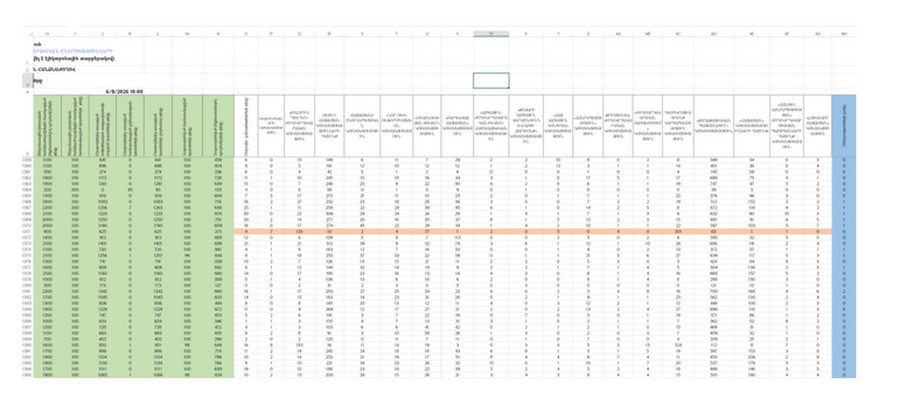
The columns containing correctly entered data are highlighted in green. The cells shifted one column to the left are highlighted in light red, while the final column, which was also fully completed, is highlighted in blue. The unaltered version of the original XLSX file is available here.
Without asserting conclusively that the “human error” was intentional rather than inadvertent, it is nevertheless necessary to note that the parliamentary composition produced by the CEC’s decision of 14 June and upheld by the Constitutional Court on 4 July (granting Civil Contract three-fifths of all parliamentary seats) is precisely the outcome that would have resulted had the above-described spreadsheet error gone undetected. In other words, had the “human error” not been discovered, its practical effect would have been entirely consistent with the parliamentary composition ultimately established through decisions that circumvented the requirements of the Electoral Code.
The Armenian Center for Political Rights also considers it necessary to address the composition of the Central Electoral Commission itself, which, in its assessment, lacks independence. The current membership of the Commission was elected on 7 October 2022 exclusively by the votes of the Civil Contract parliamentary faction.21 For nearly two decades, Vahagn Hovakimyan worked under Prime Minister Nikol Pashinyan – first at the newspapers Oragir and Haykakan Zhamanak, which Pashinyan headed, and later as his parliamentary assistant.22 Hovakimyan was subsequently elected to the Commission through his own vote while serving as a Member of Parliament.23 The manner in which the election results were ultimately certified – whereby the ruling Civil Contract party acquired not merely an absolute majority but a qualified three-fifths majority through a process that circumvented the law– is consistent with the CEC’s institutional dependence on the ruling political party.
CIRCUMVENTION OF THE REQUIREMENTS OF THE ELECTORAL CODE
In invalidating the results from polling stations Nos. 12/13, 10/51, and 35/65, the CEC maintained that these violations had no impact on the election results.24 However, as noted above, had PAP entered Parliament, Civil Contract would no longer have held three-fifths of the parliamentary mandates. Consequently, the ruling party would have been required to cooperate with an opposition possessing an effective veto over constitutional appointments and other key decisions requiring a three-fifths majority under the Constitution.25 Accordingly, the violations in these polling stations were not merely capable of affecting the election results in theory; they had a direct, concrete, and measurable impact in practice. The difference between a Parliament in which a single party holds a three-fifths majority and one in which the opposition possesses an effective constitutional veto is legally and politically significant. It therefore follows that the CEC was required to order repeat voting or new parliamentary elections.
“Where in the course of elections, such violations of this Code have taken place that might have affected the election results, the Central Electoral Commission shall adopt a decision on holding a repeat voting in separate electoral precincts, where it is possible to remedy the consequences of those violations by such measure. Where it is not possible to remedy these violations by such measure, elections of the National Assembly shall be declared as invalid, and a repeat voting for the elections of the National Assembly shall be called.”
Electoral Code of the Republic of Armenia, Article 101
The CEC’s justification that repeat voting posed a risk of “tactical voting”26 is, first and foremost, not an exception provided for by the Electoral Code. Under the applicable legal framework, there is no exception permitting the CEC to decline to order repeat voting or new elections on that basis. Moreover, PAP had already received sufficient votes in these polling stations on 7 June to surpass the four-percent threshold.
Several opposition parties challenged the CEC’s decision before the Constitutional Court, which ultimately upheld it.27 As a result, the ruling Civil Contract party transformed its absolute parliamentary majority into a qualified three-fifths majority, enabling it, without the support of any opposition party, to amend constitutional laws, appoint members of the Supreme Judicial Council, elect judges of the Constitutional Court, appoint the Prosecutor General, elect the next composition of the CEC, and appoint members of numerous other key independent state institutions.28 The Armenian Center for Political Rights, therefore, concludes that, insofar as the official election results grant the ruling party a three-fifths majority in the National Assembly, those results are incompatible with the requirements of the Electoral Code.
SELECTIVE AND DISCRIMINATORY CONDUCT OF LAW ENFORCEMENT AUTHORITIES
International and domestic election observation missions have already documented the authorities’ use of administrative resources during the pre-election period, as well as the creation of an uneven electoral playing field through social and economic measures.29 They also reported on criminal proceedings initiated during the campaign on allegations of vote-buying in favour of opposition political forces.30 Those proceedings subsequently became the principal “argument” relied upon by the incumbent authorities against the opposition parties that received the largest share of the vote. Prime Minister Nikol Pashinyan even stated31 that his party had received “100 percent organic votes, while the other parties received 100 percent vote-buying votes.”32
Against this background, the criminal proceedings initiated against representatives of opposition political forces warrant separate consideration.
During both the pre-election and post-election periods, the Anti-Corruption Committee (ACC) of the Republic of Armenia published dozens of wiretapped communications allegedly evidencing vote-buying schemes in support of opposition parties.33 Leaving aside the fact that, in previous cases, law enforcement agencies had publicly released wiretapped communications in which facts were materially distorted,34 thereby undermining confidence in this practice itself, the 2026 pre-election period revealed several incidents that directly demonstrate the selective and discretionary nature of law enforcement activity.
Under Armenian criminal law, vote-buying encompasses not only the offering or transfer of money or property in exchange for electoral participation, but also the promise of any service or other advantage.35
“Offering, promising or giving, either directly or through an intermediary, electoral bribery to a voter, including property, monetary funds, securities, other payment instruments, property rights, services or any other advantage in exchange for participating in a referendum or election, voting in any manner, invalidating a ballot, or refraining from participation in a referendum or election”
Criminal Code of the Republic of Armenia,
Article 219 (Giving an electoral bribe)
Against this legal background, the discriminatory manner in which law enforcement authorities responded to allegations of vote-buying is of particular significance. As early as 27 April 2026, the “Akanates” observation initiative published an alert on its Facebook page,36 which was later incorporated into the Mission’s preliminary findings.
“According to information received by the Mission, the Head of the Bagratashen Customs Office had recently organized a series of meetings with local administrative officials from border communities in the Tavush and Lori regions, as well as with business representatives. According to the alert, these meetings took place both at customs facilities and at private venues, accompanied by hospitality. The substance of the meetings gave rise to particular concern. According to the information received, participants were promised preferential treatment if they ensured the re-election of the ruling Civil Contract party and the Prime Minister.
“In April 2026, the management of the Bagratashen Customs Office held informal meetings with local administrative officials from border communities in the Tavush and Lori regions, as well as with business representatives. These meetings took place both on customs premises and at private venues and were accompanied by hospitality. According to the information received, participants were promised preferential treatment if they ensured the re-election of the ruling Civil Contract party and the Prime Minister.”37
The “Akanates” Mission, initiated by Transparency International Anti-Corruption Center, deployed the largest number of election observers during the 2026 parliamentary elections.38 It is difficult to accept that law enforcement authorities were unaware of these allegations. Under such circumstances, criminal proceedings should have been initiated and the credibility of the allegations investigated. Conversely, had the allegations been false, it would likewise have been in the interests of both the ACC and the authorities to refute them publicly. Instead, as later acknowledged by the Chair of the ACC, Artur Nahapetyan, every criminal proceeding initiated by the Committee concerned alleged vote-buying exclusively in favour of opposition political forces:
|
A. Nahapetyan: “Doesn’t it raise a question for you why we have no disclosures concerning the other fifteen—or sixteen—political forces? We don’t have any because you yourselves do not receive such information.” Journalist: “Can you specify which political forces were implicated in the vote-buying investigations? Strong Armenia…?” A. Nahapetyan: “The investigations concern three political forces: the Strong Armenia Party, the Prosperous Armenia Party, and the Armenia Alliance.”39 |
Excerpt from the briefing of Artur Nahapetyan at the National Assembly of the Republic of Armenia, 10 June 2026.
It should be emphasized that, if the allegations involving the Head of the Bagratashen Customs Office were true, the alleged electoral misconduct would almost certainly not have been confined to a single incident. The allegations concerned a state institution exercising significant authority, local government officials, and business representatives who presumably employed numerous individuals. Promising favourable treatment in exchange for securing the re-election of the ruling Civil Contract party and the Prime Minister would logically have produced a cascading effect, whereby participating business representatives and local officials would themselves seek to influence the voting behaviour of others. Such conduct could constitute a systemic form of electoral malpractice. Nevertheless, unlike in the cases involving the opposition, the Anti-Corruption Committee neither conducted nor published intercepted communications concerning these allegations. Indeed, according to the Chair of the Committee, no criminal proceedings were initiated at all.
The result is a situation in which more than one hundred representatives and supporters of opposition political forces have been prosecuted and detained on suspicion of election-related corruption offences, while no criminal proceedings whatsoever have been initiated against supporters of the ruling authorities despite credible evidence of comparable conduct. Under criterion (d) of the definition of a political prisoner adopted by the Parliamentary Assembly of the Council of Europe in Resolution 1900 (2012), a person is considered a political prisoner where deprivation of liberty has been imposed in a discriminatory manner, as compared with other persons, for political reasons.40 On this basis, and in light of the effective impunity enjoyed by supporters of the ruling authorities, the Armenian Center for Political Rights considers that all representatives and supporters of opposition political forces who have been deprived of their liberty as a result of selective criminal prosecutions related to the elections meet the definition of political prisoners.
CONCLUSION
Because the Electoral Code imposes a mandatory obligation (not a discretionary power) on the CEC to order repeat voting or new parliamentary elections where violations have affected the election results, the composition of the National Assembly established through the decisions of the CEC and the Constitutional Court cannot be regarded as lawful. As a consequence of those decisions, the ruling Civil Contract party once again obtained three-fifths of all parliamentary mandates, enabling it to decide virtually every significant matter unilaterally (except for making amendments to certain provisions of the Constitution and initiating a constitutional referendum on more important amendments) and to appoint virtually any senior public official without taking the views of any other political party into account.
For a prolonged period preceding the 2026 parliamentary elections (including throughout the official election campaign) law enforcement agencies and a substantial part of the justice system operated not on the basis of the rule of law but in accordance with the political interests of the ruling authorities. The Anti-Corruption Committee investigated exclusively allegations of vote-buying in favour of opposition political forces while disregarding credible evidence of comparable, or even more serious conduct allegedly committed in support of the ruling Civil Contract party. This selective approach created the unfounded public impression that electoral violations had been committed only by the opposition.
Where credible evidence of comparable electoral offences benefiting the ruling authorities is ignored and no legal action is taken, all opposition supporters detained on such charges satisfy criterion (d) of the Parliamentary Assembly of the Council of Europe Resolution 1900 (2012) defining a political prisoner.
Given the inherently latent nature of electoral corruption, effective detection of election-related offences committed in support of the incumbent authorities, and an adequate legal response to such offences is possible only where investigative bodies and the judiciary are genuinely independent. In the assessment of the Armenian Center for Political Rights, the Anti-Corruption Committee of the Republic of Armenia does not satisfy the requirements of institutional independence, both because of the selective practices described above and because of its structural dependence on the ruling political party.41
The Armenian Center for Political Rights will continue to monitor post-election developments, ongoing political persecutions, and further developments relating to electoral violations that have not received an adequate legal response.
The Armenian Center for Political Rights is a watchdog organization focusing on detecting, responding, and preventing political persecution and safeguarding political rights.
Website։ acpr.center
Email: [email protected]
Facebook: facebook.com/acpr.center
LinkedIn: linkedin.com/company/acpr-center
1 Human rights in Armennia, Amensty International, 2026 , https://www.amnesty.org/en/location/europe-and-central-asia/eastern-europe-and-central-asia/armenia/report-armenia/
2 Ibid, and
Armenia: New legal amendments expand biometric surveillance by police, CSO Meter, 2025 , https://csometer.info/updates/armenia-new-legal-amendments-expand-biometric-surveillance-police
https://acpr.center/hy/publications/report-big-brother-in-armenia/
3 Statement on the Opinion of the Venice Commission on the Crime of “Materially Incentivizing Participation in an Assembly”, ACPR, 15.10.2025, https://acpr.center/news/venice-commission-2025/
4 See the decision ՍԴՈ-1826 of the Constitutional Court of the RA, 29․04․2026, https://www.concourt.am/decision/decisions/69fb4aeaddf62_sdv-1826.pdf (in Armenian)
5 Statement on the New Political Persecution of Antifake.Am Team, ACPR, 14․11․2025, https://acpr.center/publications/statement-antifake/
6 “Hate Speech” Laws as a Tool of Political Persecution (Ad Hoc Report), ACPR, 03․06․2026, https://acpr.center/publications/report-hate-speech-laws/
7 Prime Minister Threatens Political Opponents with Violent Retaliation (Urgent Statement), ACPR, 19․05․2026, https://acpr.center/publications/statement-threats-of-retaliation/
8 Armenian Authorities are using Military Service as Punishment (Urgent Statement), ACPR, 04․06․2026, https://acpr.center/publications/statement-military-service-punishment/
9 Armenia, Parliamentary Elections, 7 June 2026: Statement of Preliminary Findings and Conclusions, OSCE/ODIHR, 08․06․2026, pp. 2 and 12, https://odihr.osce.org/odihr/664831
10 See the decision N 259-Ա of the Central Election Commission of the RA of 14․06․2026․, https://res.elections.am/images/Decisions/0-2026/14.06.26/259_A_14-06-2026.pdf (in Armenian)
11 Տեղեկատվություն, Constitutional Court of RA, 04․07․2026, https://www.concourt.am/news/single/teghekatvowt-yown-5 (in Armenian)
12 Մեղրի, 35/65. 20:00-ից հետո քվեարկությունը շարունակած ընտրատեղամասի արդյունքները, Civilnet, 09․06․2026, https://civilnet.am/hy/news/1012399 (in Armenian)
10/51 ընտրատեղամասում վերջին պահին մեծ թվով զինվորներ են բերվել քվեարկության, Factor, 07․06․2026, https://factor.am/1027660.html (in Armenian)
13 See the decisions N 254-Ա and N 255-Ա of the Central Election Commission of the RA of 11․06․2026, https://res.elections.am/images/Decisions/0-2026/11.06.26/255_A_11-06-2026.pdf (in Armenian)
https://res.elections.am/images/Decisions/0-2026/11.06.26/254_A_11-06-2026.pdf (in Armenian)
14 See the decision N 14-Ա of the Central Election Commission of the RA of 12․06․2026, https://res.elections.am/images/Tec/Decisions/12/2026.14-A._12-06-2026.pdf (in Armenian)
15 See the initial results of 2026 parliamentary elections in the unaltered xlsx file published by
Central Election Commission of the RA, https://drive.google.com/file/d/12hi9W7XrBDygRMG0WnIt-2E2nGCfOCB-/view?usp=sharing (in Armenian)
16 «Բարգավաճ Հայաստան» -ը ստացել է 77 ձայն, մինչդեռ ԿԸՀ կայքում նշված է 1 ձայն․ Տոնոյան (տեսանյութ), A1+, 08․06․2026, https://www.a1plus.am/hy/article/503110 (in Armenian)
17 ԿԸՀ ամփոփած նախնական արդյունքներով՝ ԲՀԿ-ն չի հաղթահարել անցումային շեմը, RFE/RL, 08․06․2026, https://www.azatutyun.am/a/kyh-ampopats-nakhnakan-ardyounknerov-bhk-n-chi-haghtaharel-antsoumayin-shemy/33775110.html (in Armenian)
18 «Բարգավաճ Հայաստան» -ը ստացել է․․․
19 Քոչարյանը ՍԴ-ում կվիճարկի ընտրությունների արդյունքները, Ծառուկյանը պահանջում է իր 120 ձայները, RFE/RL, 08․06․2026, https://www.azatutyun.am/a/33775894.html (in Armenian)
20 Այս պահին բազմաթիվ ընտրատեղամասերում վերահաշվարկ է իրականացվում. ԿԸՀ նախագահ, RFE/RL, 10․06․2026, https://www.azatutyun.am/a/ays-pahin-bazmativ-yntrateghamaseroum-verahashvark-e-irakanatsvoum-kyh-nakhagah/33777418.html (in Armenian)
21 See the Minutes of the National Assembly of the RA sitting of 7 October 2022, http://www.parliament.am/register.php?AgendaID=659&day=07&month=10&year=2022&lang=#07.10.2022 (in Armenian)
Վահագն Հովակիմյանն ընտրվեց ԿԸՀ նախագահ, RFE/RL, 07․10․2022,
https://www.azatutyun.am/a/32070147.html (in Armenian)
22 See Vahagn Hovakimyan’s biography on the official page of the National Assembly of the RA, http://www.parliament.am/deputies.php?sel=details&ID=1378&lang=eng
23 Մասնակցելով իր իսկ քվեարկությանը Վահագն Հովակիմյանը «օրենք է խախտել», RFE/RL, 08․10․2022, https://www.azatutyun.am/a/32071381.html
24 See the decision N 258 -Ա of the Central Election Commission of the RA of 14․06․2026, p. 79 https://res.elections.am/images/Decisions/0-2026/14.06.26/258_A_14-06-2026.pdf
25 In the case of the appointment of certain public officials, for which the Constitution requires the support of three-fifths of the votes of Members of Parliament, there are mechanisms that allow this requirement to be effectively “circumvented.” For example, “where the office of the Prosecutor General becomes vacant in accordance with the procedure established by law, the Prosecutor General shall be temporarily replaced by the Deputy Prosecutor General with the longest experience in the prosecution system” (see Article 9 of the Law of the Republic of Armenia on the Prosecutor’s Office). Through tactical resignations, it is possible to secure a “desirable” acting Prosecutor General and avoid cooperation with the opposition in selecting a mutually acceptable candidate. The implications of the three-fifths majority requirement are discussed in the ACPR briefing paper “The Three-Fifths Majority of the Total Number of Votes of Members of the National Assembly and Its Consequences”, 9 June 2026., https://acpr.center/hy/publications/statement-three-fifth/ (in Armenian)
26 ԿԸՀ-ն պարզաբանել է վերաքվեարկություն չնշանակելու պատճառները, Civilnet, 15․06․2026, https://civilnet.am/hy/news/1012519 (in Armenian)
27 Տեղեկատվություն, Constitutional Court of the RA, 04․07․2026, https://www.concourt.am/news/single/teghekatvowt-yown-5 (in Armenian)
28 Իրազեկում՝ ԱԺ պատգամավորների ընդհանուր ձայների «երեք հինգերորդ» մեծամասնության և դրա հետևանքների վերաբերյալ, ACPR, 09․06․2026, https://acpr.center/hy/publications/statement-three-fifth/ (in Armenian)
29 Armenia, Parliamentary Elections, 7 June 2026: Statement of Preliminary Findings and Conclusions, OSCE/ODIHR, 08․06․2026, https://odihr.osce.org/odihr/664831,
Observation of the 2026 Parliamentary Elections in Armenia, Transparency International Anticorruption Center, 01.04.2026 – 20.06.2026, https://www.transparency.am/en/project/184
30 Armenia, Parliamentary Elections, 7 June 2026․․․ p. 11
31 Վարչապետը խոսում է ընտրակաշառքից, փաստաբանը համարում՝ ուղիղ միջամտություն դատական գործերին, RFE/RL, 15․06․2026, https://www.azatutyun.am/a/varchapety-khosoum-e-yntrakasharkits-pastabany-hamaroum-oughigh-mijamtoutyoun-datakan-gortserin/33781585.html (in Armenian)
32 It is noteworthy that, at the same time, Suren Grigoryan, a representative of the Civil Contract party before the Constitutional Court, expressed a different position, stating that “in our view, the distribution of electoral bribes by opposition forces […] did not cross the threshold of having a material impact on the elections.”,
«Գուցե լցոնումնե՞ր են եղել». կասկածներ ընտրողների թվերի շուրջ, RFE/RL, 30․06․2026, https://www.azatutyun.am/a/goutse-ltsonoumne-r-en-eghel-kaskatsner-yntroghneri-tveri-shourj/33792129.html (in Armenian)
33 2026 թվականի փետրվարի 7-ից կոռուպցիոն բնույթի ընտրական հանցագործությունների դեպքերի առթիվ նախաձեռնվել է 115 քրեական վարույթ, Anti-Corruption Committee of the RA, 09.06.2026, https://www.anticorruption.am/hy/post/2026-tvakani-petrvari-7-its-koruptsion-bnuyti-ntrakan-hantsagortsutyunneri-depkeri-artiv-nakhadzernvel-e-115-kreakan-varuyt-1 (in Armenian)
34 Injustice in Armenia: Mass Political Persecutions in 2025, Part I (May–September), ACPR, 05.11.2025, pp. 22–27, https://acpr.center/publications/report-injustice-in-armenia/
35 See the Article 219 of the Criminal Code of the RA
36 See the Facebook post “Eyewitness’ diary N 8” of the “Akanates” observation initiative , 27․04․2026, https://www.facebook.com/akanatesditord/posts/pfbid0efsvsKx6gqzCBfLLMmAg4f1N8JbWuaySmuhc8p6fjT17uqKvZPEtihDNJ4kDS6HFl (in Armenian)
37 Նախնական Տեղեկանք ապրիլի 1-մայիսի 5, 2026 , «“Akanates” observation initiative, p. 14, https://transparency.am/hy/publication/pdf/423/12649 (in Armenian)
38 See the official page of the CEC, Elections to the National Assembly, 2026/Observers, Media representatives, https://www.elections.am/Elections/Parliamentary
39 Արթուր Նահապետյանի ճեպազրույցը | ՈՒՂԻՂ, Public TV Company of Armenia, 10․06․2026, https://www.youtube.com/watch?v=KtjYIcyYy28 (in Armenian)
40 The definition of political prisoner (Resolution 1900 (2012)), Parliamentary Assembly of the Council of Europe, 03․10․2012, https://pace.coe.int/en/files/19150/html
41 The Anti-Corruption Committee was established in 2021 at the initiative of Nikol Pashinyan’s government. Although, under the law, the members of the Committee’s leadership are independent officials, the Committee’s first Chairperson, Sasun Khachatryan, resigned at the instruction of Nikol Pashinyan, while the current Chairperson, Artur Nahapetyan, was selected from among the candidates by Nikol Pashinyan himself. Sources:
Պաշտոնանկությունների ոճը վտանգ է սահմանադրական կարգի համար, Civilnet, 27․11․2024, https://civilnet.am/hy/news/807040 (in Armenian)
Հակակոռուպցիոնի ղեկավարի՝ վարչապետի նախընտրած թեկնածուն Արթուր Նահապետյանն է, RFE/RL Ռադիոկայան, 17․03․2025, https://www.azatutyun.am/a/hakakoruptsioni-ghekavari-varchapeti-nakhyntrats-teknatsun-artur-nahapetyann-e/33350470.html (in Armenian)
Armenian Center for Political Rights