
































by Dr. Hriday Sarma
The first round of negotiations between the United States and Iran has ended with what mediators Pakistan and Qatar described as “encouraging progress.” Meeting in Switzerland, both sides agreed on a roadmap towards a comprehensive settlement within 60 days and established a communication mechanism to prevent incidents in the Strait of Hormuz and safeguard commercial shipping. Technical negotiations are continuing, keeping alive hopes that the memorandum of understanding signed last week could evolve into a durable peace agreement.
For much of the world, the talks are being viewed through the familiar lenses of sanctions, nuclear diplomacy and regional security. For Armenia, however, another question deserves equal attention: what would a stable Iran mean for the South Caucasus?
The answer extends far beyond geopolitics.
Read also
Prime Minister Nikol Pashinyan welcomed the initial agreement and praised the mediation efforts of Pakistan, Qatar, Türkiye and other partners, expressing hope that it would pave the way for lasting peace across the Middle East. His statement reflected not only diplomatic goodwill but Armenia’s interest in a more stable neighbourhood.
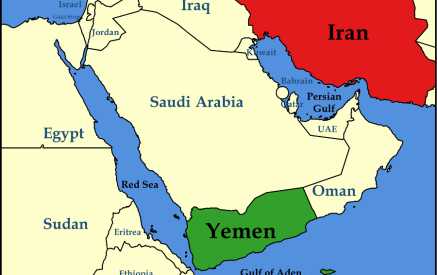
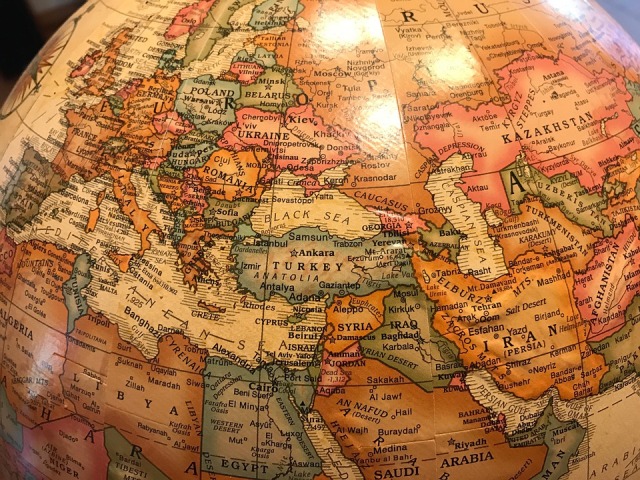
Armenia shares a 44-kilometre border with Iran, its only southern land gateway to the Persian Gulf. At a time when Armenia’s borders with Türkiye and Azerbaijan remain closed, Iran remains an indispensable economic partner and one of the country’s most important links to international markets. Stability south of the border therefore carries direct implications for Armenian trade, transport and energy security.
The economic case begins with the Strait of Hormuz.
According to the International Energy Agency (IEA), nearly 15 million barrels of crude oil per day passed through the strait in 2025, accounting for about 34% of global seaborne crude trade. The waterway also handled around one-fifth of global liquefied natural gas (LNG) trade, predominantly from Qatar, with nearly 83% destined for Asian markets.
When conflict disrupted shipping, the consequences spread far beyond the Gulf. Oil prices rose, shipping insurance premiums increased and supply chains faced renewed uncertainty. Inflationary pressures intensified as many economies were attempting to recover from slowing growth.
The agreement seeks to reverse that trajectory.
By reopening the Strait of Hormuz and allowing Iranian oil exports to resume while broader negotiations continue, the framework aims to restore confidence in global energy markets. The IEA’s latest outlook projects that, following the recovery of flows through Hormuz, global oil supply could expand by about 8 million barrels per day by 2027, significantly outpacing demand growth and helping rebuild depleted inventories.
For Armenia, that matters even though it is not a major energy producer.
Lower global oil prices reduce transport costs, moderate imported inflation and ease pressure on businesses that rely on international supply chains. Armenia also maintains a longstanding gas-for-electricity swap arrangement with Iran, under which Iranian natural gas is exchanged for Armenian electricity. Greater economic stability in Iran strengthens that partnership while reducing uncertainty along one of Armenia’s most important economic frontiers.
A peaceful Iran could also strengthen Armenia’s long-term connectivity ambitions.
Projects such as the North-South Transport Corridor, improvements at the Meghri-Nordooz border crossing, and the broader Persian Gulf-Black Sea transport corridor seek to connect Iranian ports with Armenia, Georgia and European markets. These initiatives have long been viewed as opportunities to transform Armenia from a landlocked economy into a regional transit link between the Middle East, the South Caucasus and Europe. Regional stability would significantly improve their commercial viability.
The proposed economic architecture of the agreement reinforces that possibility.
The framework includes plans for a US$300 billion Reconstruction and Development Fund, financed through private-sector investment and intended to support projects in energy, logistics, transport and manufacturing once a comprehensive agreement is concluded. More than half of the proposed commitments have reportedly already been secured from companies across the Gulf, Asia, Africa and the Americas.
Although those investments are directed primarily towards Iran, neighbouring economies could benefit through increased cross-border commerce, stronger logistics networks and greater investor confidence across the region. Economic integration often generates spillover effects beyond national borders.
The diplomatic process also carries important lessons.
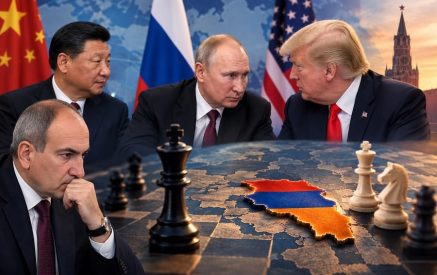
The negotiations have been sustained through mediation led by Pakistan and Qatar, with support from other regional actors. Russia publicly welcomed the understandings reached, while China described the agreement as an opportunity to reduce tensions and restore regional stability. Even amid broader geopolitical competition, major powers have found common ground in protecting one of the world’s most important energy corridors.
The negotiations remain at an early stage. Difficult questions concerning Iran’s nuclear programme, sanctions and regional security arrangements remain unresolved, and implementation will ultimately determine whether today’s optimism translates into lasting peace.
Yet one conclusion is already emerging. The significance of the US-Iran peace process extends well beyond Washington and Tehran. For Armenia, a more stable Iran means more than a quieter southern border. It offers the prospect of stronger trade, more secure energy cooperation, improved regional connectivity and a more predictable economic environment. In an increasingly interconnected Eurasia, peace in the Gulf may prove to be an economic opportunity for the South Caucasus.
Dr. Hriday Sarma is currently a Fellow at the South Asia Democratic Forum in Brussels. He is also an India-based lawyer specializing in cross-border trade and investments. The views and opinions expressed in this article are those of the author.