









































Ecumenical News: The demolition of the Armenian “Holy Mother of God” Cathedral in Stepanakert, in the occupied region of Artsakh, raises growing concerns over the erasure of Armenian cultural heritage
In a serious development affecting Armenian ecclesiastical heritage, reports from cultural authorities in Artsakh indicate that Azerbaijan has demolished the “Holy Mother of God – Protection” Cathedral in the capital, Stepanakert. The move has sparked widespread concern among church and human rights circles, amid warnings of a systematic policy aimed at erasing Armenian religious and cultural identity in the region.
The demolished cathedral was one of the most prominent modern ecclesiastical landmarks in the city. Its foundation stone was laid on July 19, 2006, by Catholicos of All Armenians Karekin II, and it was officially consecrated on April 7, 2019. Designed by architect Gagik Yeranosyan, the structure stood approximately 35 meters tall, with a bell tower reaching 24 meters, making it one of Stepanakert’s most notable religious and architectural symbols.
Since its inauguration, the cathedral had served as a central spiritual hub for members of the Armenian Apostolic Church and a symbol of the continuity of Armenian Orthodox faith following decades of restriction during the Soviet era.
Read also
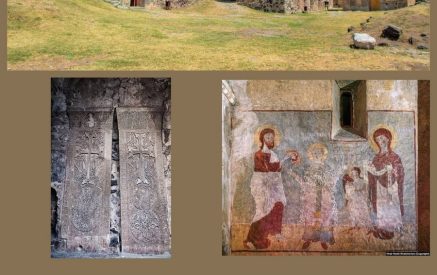
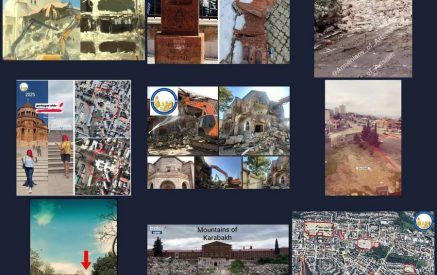
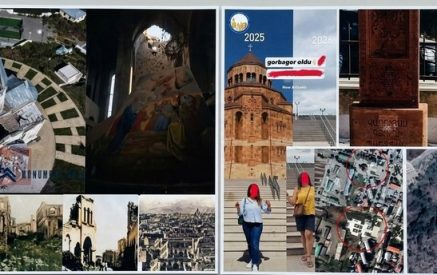
According to Artsakh’s cultural heritage ombudsman, Hovik Avanesov, the demolition was not random but part of a broader pattern indicating a systematic targeting of Armenian presence in the region especially as it coincided with the 111th anniversary of the Armenian Genocide, adding deep symbolic and historical significance to the act.
Avanesov also noted that public calls for the destruction of the church had appeared on Azerbaijani social media prior to the demolition, without any apparent accountability reflecting what he described as an environment of impunity.
The incident follows reports that another Armenian church in the city, St. Hakob Church, was demolished just days earlier, reinforcing concerns of a repeated pattern targeting Armenian ecclesiastical structures in the region.
The cathedral represented a continuation of a much older Armenian Christian presence in Stepanakert, where a church dating back to the late 19th century had been shut down during the Soviet period under policies restricting religious life. The construction of the modern cathedral symbolized the revival of that presence after decades of suppression.
During periods of tension and blockade in the region, the cathedral became a central place for communal and spiritual gathering—a refuge for residents amid difficult humanitarian conditions—giving it significance beyond that of a religious building.
Cultural and church authorities in Artsakh condemned what they described as a “deliberate act of erasure,” warning that continued international silence may encourage further such actions. They also expressed concern over the lack of decisive responses at both regional and international levels, noting that this undermines efforts to preserve the historical identity of indigenous peoples in the region.
The demolition of the “Holy Mother of God – Protection” Cathedral is not merely an architectural loss; it represents a profound wound in the ecclesiastical memory and spiritual identity of a people whose history is deeply rooted in faith and heritage.
In light of these developments, church and human rights voices are increasingly calling for serious international action to protect holy sites and preserve religious heritage as an essential part of human dignity and the right to maintain one’s identity and roots.