


































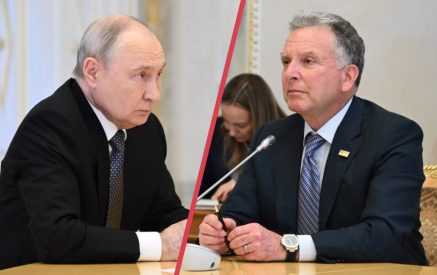

Robert Amsterdam’s letter to Kaja Kallas
Her Excellency Ms. Kaja Kallas
High Representative of the Union for Foreign Affairs and Security Policy
Vice-President of the European Commission
European External Action Service
Brussels
Subject: The integrity of the electoral process in the Republic of Armenia and interference through disinformation in the run-up to the elections
Read also
Her Excellency the High Representative
I write to you with the utmost institutional respect and with the deference due both to your high office and to the values you are called upon to represent. I do so not to ask the European Union to take sides with one Armenian political force or another, but rather to ask that the Union, in Armenia, apply exactly the same yardstick by which it measures electoral interference anywhere else in the world.
A few weeks ahead of the 7 June Armenian parliamentary elections, a pan-European media outlet, Euronews, announced in advance that the current Prime Minister, Mr. Nikol Pashinyan, will emerge victorious in the Armenian elections. Shortly before the publication of this article, the International Republican Institute released a poll attributing a mere six per cent of the vote to the opposition party ‘Strong Armenia’, when no minimally credible poll conducted on the ground in Armenia gives it less than twenty-five per cent. The gap between the figures laid out in the International Republican Institute poll and domestic Armenian polling is not a margin of error, they are incomparable.
When an international poll indicates polling numbers so divorced from the reality on the ground in the country, it ceases to be legitimate election opinion polling. An election forecast released weeks before an undoubtedly critical vote, with figures that no local observer recognises, does not inform the citizen, it acts to demobilise them. Its function is not to inform the voter on current trends in Armenia, but instead acts as a means to persuade them that their decision is irrelevant. That the upcoming result is already a foregone conclusion, and that therefore going to the polls is futile. It is difficult to imagine a ‘modus operandi’ more contrary to the very essence of suffrage than one that seeks to convince that it is not worth voting.
Madam High Representative, it is worth recalling that Article 2 of the Treaty on European Union does not list democracy, the rule of law, pluralism and respect for human rights merely as rhetorical flourishes, but rather as the values upon which the Union is founded. Further, Article 21 requires the European Union to project those very values in its external action. The right to free elections is not limited to the existence of ballot boxes, it also requires a public space where the will of the people can be formed without manipulation, where citizens know that their vote counts. An election whose result is announced before it takes place is not a free election, it is a political charade.
The European Union has devoted years and considerable resources to building a doctrine and an entire institutional apparatus designed to counter what its own documents refer to as ‘manipulation and interference by foreign information’. The Union rightly warns of the danger of operations that seek to predetermine election results and persuade citizens of the futility of their vote. It is essential that the same vigilance be applied when the operation consists of proclaiming a winner in a pivotal election, weeks in advance, from within the European Union. European Union principles must be applied consistently, which cannot be the case when a course of action is classified as unacceptable interference when it comes from a particular geographical direction, and a legitimate exercise of journalism when it comes from the opposite direction.
Added to these concerns, is the persistent suggestion that part of the fifty million euros channelled from the West to the current Armenian government could be funding precisely this kind of campaign. It is not the purpose of this letter to verify figures, but to highlight a basic requirement of democratic integrity that European funds, drawn from European taxpayers’ money, cannot be used, directly or indirectly to predetermine, or attempt to predetermine, the outcome of sovereign elections. If the Union demands transparency from others, it must be able to offer it regarding the use of its own resources.
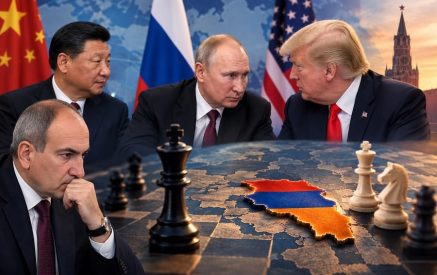
The convenience of the narrative according to which everything that happens contrary to the European Union’s desired result in Armenia, is explained by ‘Russian disinformation’ is noted. It is a conveniently watertight thesis whereby any criticism of the government, any dissenting voice, any defence of the Armenian Apostolic Church or of national sovereignty, is automatically reclassified as foreign propaganda and, therefore, dismissible without the need for engagement or a response. But an argument that serves to dismiss everything proves nothing. Armenia, being a sovereign state, the cradle of Christianity and an essential part of the balance in its region, deserves to be treated as a political entity in its own right, and not as the arena for a narrative battle between external powers.
Interference is interference regardless of the banner under which it is presented. If the Union rightly condemns operations that seek to distort the will of the electorate, that condemnation must be principled and consistently applied. Otherwise, the European defence of democracy runs the risk of appearing less a principle than a preference, vitiating the value entirely of the values enshrined in Article 2.
For all these reasons, it is respectfully and formally requested that you and the European External Action Service undertake four actions, all of which are fully consistent with the Union’s mission:
1.That you publicly reaffirm the principle that the only legitimate verdict on an election is that delivered by the ballot box on polling day, and never an early announcement;
2.That it be verified that no European funds are used, directly or indirectly, to finance campaigns aimed at predetermining or influencing the Armenian election result;
3.That genuine, transparent and independent election observation be supported, in accordance with OSCE/ODIHR standards; and
4.That the European institutions refrain from lending institutional credibility to opinion polls whose disconnect from reality makes them, at the very least, difficult to defend.
I sincerely thank you for your attention to these considerations. I put them forward in the conviction that the European Union is all the greater for being consistent in its applications of the values that it espouses, and that few things bring greater honour to a normative power than applying to itself the standards it demands of others.
I remain at your disposal to provide further details.
Yours faithfully,
Robert R. AMSTERDAM
Founder and Managing Partner
Amsterdam & Partners LLP