



























When political actors involved in Armenia’s electoral process take a significant step and insist that it has nothing to do with the elections, I find such claims hard to take seriously.
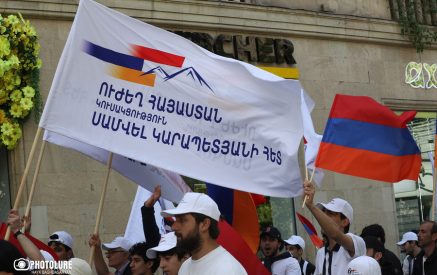
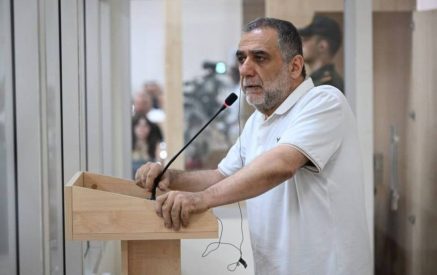
Take the authorities’ recent allegations against Andranik Tevanyan. They say they have known since 2024 about his supposed “espionage activities.” In other words, they claim they knew that Tevanyan had deciphered, translated, and sent the contents of a closed National Assembly session to Moscow, receiving more than $600,000 in return. (One has to give the National Security Service and the Investigative Committee some credit for their sense of humor.)
If that is true, then a simple question arises: why was he not arrested back then? If the authorities knew he was engaged in such an extraordinarily profitable enterprise, why wait until he became number two on an electoral list before suddenly discovering his “espionage”?
The same logic applies to Russia. I find it hard to believe that the economic measures taken against Armenia have nothing to do with the political and electoral processes unfolding in the country. For years, Armenian brandy, Jermuk mineral water, apricots, and flowers were apparently just fine for the Russian market. Then, suddenly, in May 2026, they were no longer acceptable.
Read also
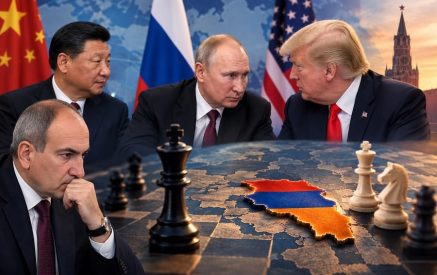
That does not mean the Armenian government bears no responsibility. One could argue that Pashinyan himself helped provoke such a reaction by hosting in Yerevan the leaders of countries that Moscow regards as hostile and by allowing Zelenskyy to use the Armenian capital as a platform from which to threaten the Kremlin.
None of this, however, justifies Russia’s “sanctions.” Such pressure is unacceptable because it hurts ordinary Armenian citizens. Nor does it make the argument any more convincing that these measures are merely part of a routine economic dispute.
The same can be said of the United States. The Trump administration appears to have concluded that Pashinyan’s government is willing to sign virtually any document in exchange for expressions of support from Washington. As a result, an agreement on “critical minerals and rare earth elements” was quickly put on the table, despite the fact that, to my knowledge, the issue had not been publicly discussed in the preceding months.
The declaration could just as easily have been signed in July or August. Yet the fact that it was signed only days before the elections, during a visit by the U.S. Secretary of State that had not been planned in advance, is difficult to view as a coincidence.
“Timing is everything,” as they say in the West.
There is no need to pretend that events taking place on the eve of an election have nothing to do with the election itself.
Aram ABRAHAMYAN