














Armenia: Increased Arrests of Government Critics Ahead of June Parliamentary Elections
Reports of Fear, Intimidation and Political Reprisals; Allegations of Foreign Interference
(Yerevan, June 1, 2026): The Armenian government has expanded its arrests of government critics for alleged speech-based offenses ahead of the June 7 parliamentary elections, said the International Observatory for Democracy in Armenia (IODA). During its second fact-finding mission in the country, IODA also documented claims of foreign interference in the elections; repeated instances of the misuse of state resources for electioneering by the ruling “Civil Contract” party; and extensive reports that voters, particularly government employees, fear reprisals for supporting opposition candidates.
“Prime Minister Nikol Pashinyan is responsible for the troubling conditions in the country, including not only the prosecutions of critics, but also the hostile election atmosphere marked by his verbal attacks on ordinary citizens expressing their opinions,” said Sarah Leah Whitson, IODA Board Member. “The government has a duty to ensure that every Armenian citizen feels safe and free to criticize the prime minister and challenge the government’s policies, regardless of how offensive it finds the criticisms.”
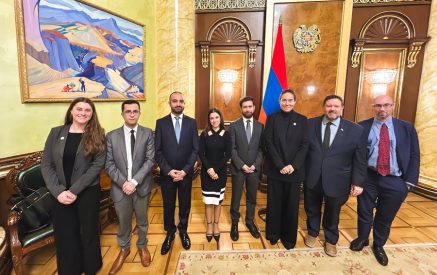
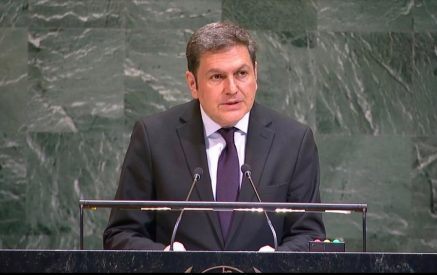
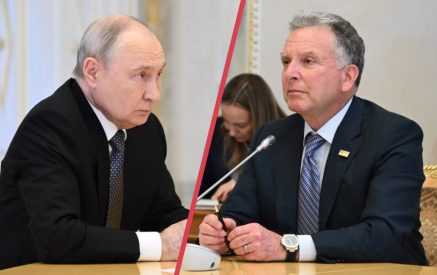
IODA’s second fact-finding mission, from May 22 – 27, 2026, included a delegation of international experts, including international human rights lawyers Philippe Kalfayan, Sarah Leah Whitson and Diana Kearney, and former Canadian member of parliament Bryan May.
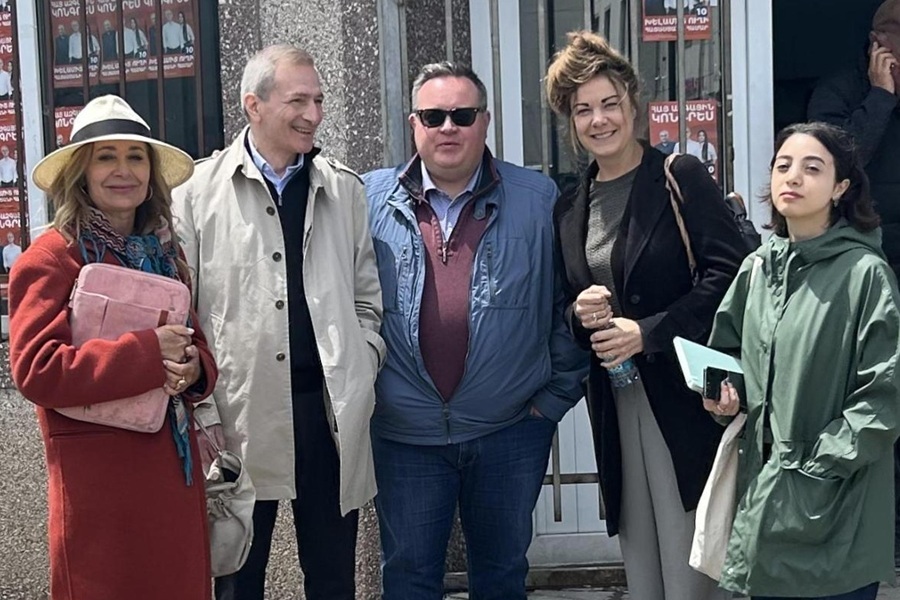
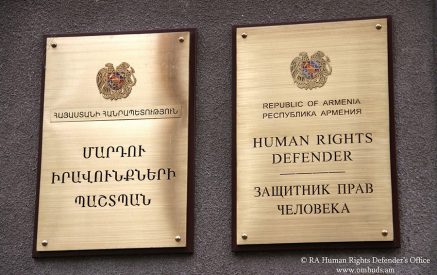
In addition to meetings in Yerevan, where it met with the Corruption Prevention Commission, the group traveled to Hrazdan, Sevan, Ijevan, Dilijan, Vanadzor, Spitak, and Gyumri to meet with local representatives of political parties, lawyers, election observers, and civil society groups. IODA also sought meetings with Civil Contract representatives but did not receive a reply, and sought meetings with the Constitutional Court, the Investigative Committee, and the Human Rights Defender’s Office (Ombudsman) but was unable to secure a meeting with them.
Expanded Arrests of Government Critics
In addition to the concerns raised following IODA’s first fact-finding mission, the group documented several new instances of arrests of critics of the government, in several cases on vague, speech-based offenses under the penal code.
● On March 29, Pashinyan visited Saint Anna church in Yerevan during a crowded service; plainclothes security personnel pushed worshipers aside to make room for him.The pushing led to a verbal dispute, which escalated into a physical scuffle. Security forces detained and criminally charged 18-year-old high school student twin brothers Davit Minasyan and Mikayel Minasyan, as well as Gevorg Gevorgyan. Gevorgyan later stated that he had been detained for “looking at Nikol Pashinyan in the eyes” inside the church. They charged Davit with hooliganism and using violence to interfere with official political activity, Mikael with assisting him, and Gevorgyan with organizing the entire episode. Later that day, police searched the Minasyans’ apartment, but according to defense counsel, no item relevant to the investigation was found. Significantly, the Minasyan brothers and Gevorgyan did not know each other. Judge Mnatsakan Martirosyan, long accused of politically motivated decisions, released Mikael and Gevorg on March 31, with bail of 5 million AMD (US $13,585) each, along with a travel ban, but on April 1 ordered Davit held in pre-trial detention for two months. Due to his deteriorating health condition, security forces transferred him to a medical facility multiple times. The judge released him on April 14, 2026, subject to a travel ban, while the investigation remains ongoing.
● On May 12, security forces arrested blogger Artak Avetisyan in Yerevan and charged him initially with hate speech but subsequently with hooliganism after he called Prime Minister Pashinyan a “traitor” during a live broadcast. He remains detained.
● On May 16, Armen Hovhannisyan, a resident of Artashat, reportedly died by suicide while in police custody in a Yerevan psychiatric facility. Security forces had detained him on suspicion of tearing down a Civil Contract election poster and accused him of obstructing campaigning, but had not formally charged him. Following signs of psychological distress, they transferred him to a psychiatric institution under police supervision, where he later reportedly died by hanging. Authorities subsequently announced a criminal investigation into the incident but to date have announced no findings.
● On May 18, security forces arrested Artsakh refugee and activist Artur Osipyan following a heated verbal confrontation with Pashinyan. A judge ordered him held in pre-trial detention for two months. The prosecutor has charged him with inciting violence, hooliganism, and obstruction of campaigning. Authorities also cited a Facebook post in which Osipyan allegedly threatened the Prime Minister and called for violence against him.
“The government has no business prosecuting people who challenge it just because it may not like the criticism. Nor should the government be suppressing legitimate political debate by claiming that it reflects the equivalent of a ‘plot to overthrow the regime’,” said Bryan May IODA Board Member. “A heated election is no excuse for the government to shirk its obligation to protect free and vigorous political speech and refrain from using its prosecutorial authority to silence critics.”
Although international human rights law demands the protection of political speech by all sides, lawyers and representatives of opposition political parties expressed dismay that the prosecutor’s office had failed to prosecute similar alleged “hate crimes” and other speech offenses by government supporters despite complaints they had filed, suggesting that these prosecutions are also selective. IODA reiterates its earlier recommendation that parliament should amend the penal code to abolish vague, speech-based restrictions, such as “hooliganism” or “calling for the overthrow of the government,” which are rife for abuse and subvert the free speech rights of Armenian citizens.
Misuse of State Resources by Ruling “Civil Contract” Party
The ruling party, Civil Contract, appears in a number of instances to have misused state resources to support its electioneering for the upcoming elections. In particular, pro-Civil Contract employees of educational institutions appear to have mobilized students and teachers to support the ruling party’s activities, despite legal prohibitions on the participation of public employees in political campaigning while acting in their official capacity. There is no evidence that the government has investigated these cases.
● On May 13, numerous school principals and teachers from Aparan and nearby villages reportedly participated during working hours in a Civil Contract rally in Aparan attended by the prime minister. According to eyewitnesses, school administrators removed students from classes so they could greet the prime minister, and provided them with flags, and issued detailed instructions regarding students’ appearance and clothing, including recommendations that girls wear braided hairstyles. Students from the Tsaghkashen village school were allegedly provided with Civil Contract T-shirts.
● On May 15, Arman Tatoyan, leader of the “Wings of Unity” party, published an audio recording of Lusine Grigoryan, a lecturer at Armavir Regional State College and a member of the “Civil Contract” faction of the Armavir Council of Elders, ordering the college students to participate in a “Civil Contract” campaign event and saying she herself had been ordered to organize it. Although the Deputy Minister of Education later stated that Grigoryan was a mere librarian acting without authority and had been reprimanded, the government made no broader investigation into possible institutional involvement or coercion.
● On May 21, representatives of several educational and cultural institutions were reportedly involved in campaign activities during a “Civil Contract” campaign event attended by the prime minister in Verin Artashat village of Ararat Province. At Verin Artashat Secondary School, classes ended earlier than scheduled so that students could attend the rally. Teachers and the school principal, Shushanik Hakhnazaryan, also participated. The acting director of the Artashat Charles Aznavour Cultural Center, Ninel Gabrielyan, and cultural center employee and choreographer Tiruhi Soghomonyan, reportedly organized children from the center to attend the event. The “Akanates” observation mission subsequently filed administrative complaints for these apparently prohibited activities.
Opposition party members interviewed by IODA provided numerous, detailed accounts similar to these events, suggesting that such practices were not isolated incidents but part of a broader trend in multiple regions during the campaign period. In addition, they repeatedly alleged that tax authorities, law enforcement agencies, and other state-controlled institutions pressured or intimidated opposition-affiliated individuals, business owners, local community leaders, and public-sector employees to end their support for opposition parties, but did not provide specific evidence. They cited threatened inspections, criminal or administrative proceedings, loss of employment, and other forms of institutional pressure as contributing to a climate of fear and self-censorship, discouraging open political participation and support for opposition parties. IODA was not able to verify individual cases supporting these allegations.
Fear and Intimidation of Voters, Voting Suppression
The elections are taking place amid an atmosphere of serious political polarization among voters, persistent reports of fear and intimidation by government officials, and overarching concerns about foreign influence in the elections. In at least ten interviews, members of political opposition parties reported voters expressing fear and intimidation as the primary reason they were avoiding participating in political rallies, being seen with opposition candidates, or even voting. In particular, they repeatedly cited fears expressed by municipal and government employees – teachers, police officers, and utility workers in particular – that their superiors at work would penalize them or ask them to resign if they appeared to be supporting opposition parties. In addition, every member of the opposition questioned reported that they believe they are being surveilled by state agencies. This included allegations of phone wiretapping and bugged campaign offices.
Observer organizations, such as an interim report by Eyewitness/Akanates, also detailed several cases in which political actors and private employers allegedly used workplace leverage to mobilize employees for campaign activities or influence their political participation. Reported incidents included the organized transportation of employees to rallies, pressure to attend campaign events, and alleged threats related to employment status or promises of financial incentives tied to electoral support. These allegations involved companies and political actors associated with multiple parties, including “Civil Contract,” “Prosperous Armenia,” “Strong Armenia,” and “For the Republic.” Domestic observer organizations referred several cases to law enforcement authorities.
Prime Minister Pashinyan’s aggressive and abrasive interactions with voters, documented in now viral videos, emerged repeatedly as a factor contributing to voters’ fears and a climate of intimidation against government critics. Much of his violent rhetoric has targeted Armenian refugees from Artsakh, drawing on popular resentment at the costs of the war to Armenian citizens.
● On March 22, during a campaign event in the Yerevan metro, Pashinyan approached a forcibly displaced woman from Nagorno-Karabakh, Armine Mosiyan, and her child, offering them a pin featuring the map of the Republic of Armenia. After Mosiyan refused and explained her reasons, Pashinyan continued arguing with her despite her repeated requests that he refrain. He raised his voice, pointed his finger at her, and stated that billions earned by Armenian citizens had been spent on sustaining Armenians in Nagorno-Karabakh, calling the woman and other Artsakh refugees “runaways.” Pashinyan eventually issued a partial apology. Nevertheless, pro-government media outlets continued targeting Mosiyan after the incident, further amplifying concerns about hostility toward displaced Artsakh Armenians.
● At a May 18 Civil Contract rally in Yerevan’s Arabkir district, obstetrician-gynecologist Arpine Soghoyan approached Pashinyan, criticized his policies and noted that her brother, Col. Hrant Papikyan, a high-ranking Armenian military officer/medic, remains missing in action in Artsakh. Pashinyan responded by shouting at her, associating her with opposition leaders, and threatening to make her “kneel” like he would make them kneel. As she attempted to leave, he then grabbed her hand and pulled her back, demanding that she listen to him, while his supporters shouted over her and prevented her from speaking. Later that day, responding to public criticism, Pashinyan stated: “I did not threaten the woman. I threatened Robik [Robert Kocharyan], and I am threatening him now as well. I am saying I will finish him off [slay] — I will.”
● On May 18, during a contentious exchange, Pashinyan responded to criticism from Artur Osipyan (who was subsequently arrested, as noted above) with a tirade directed at displaced Artsakh Armenians, referring to Artsakh political figures and refugees as “bastards” and “scumbags,” while suggesting they had no place in Yerevan unless they adopted “the mentality of Armenian citizens.” Video footage showed Pashinyan saying to Osipyan:
Get lost, you fool. Let the pseudo-elites of Karabakh get out of here and leave. Who are these people? Get out entirely. You smashed your head into the wall — you should have gone and died in place of our children, you thieving animals. They came talking about the Karabakh issue. If the Karabakh issue mattered, you should have gone and died. Why are you alive? Why are you alive, you scum? Why didn’t you die? Why is Shahramanyan alive? Why are your so-called National Assembly members alive?
“Pashinyan’s rhetoric humiliating and stigmatizing displaced Armenian refugees from Artsakh is harmful and dangerous, inciting public hostility and contributing to the country’s polarization,” said Diana Kearney, IODA Board Member. “Pashinyan should display respect and civility to all people in Armenia, rather than attempt to generate votes by inflaming tensions.
Allegations of Foreign Influence
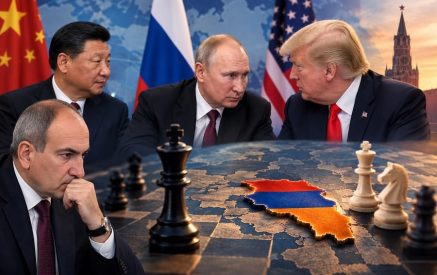
The most dominant feature of the political debates taking place across the country appear to revolve around competing allegations of foreign influence, foreign allegiance, and voter manipulation. This includes allegations of covert campaigns to flood public spaces with pro or anti-government messages, as well as alarmist claims about the policies that would follow the victory of competing political parties. Recent media reports have included purported leaked documents allegedly originating either from Russian or Armenian sources, detailing propaganda strategies, coordinated information campaigns, and political risk assessments concerning both government and opposition actors. At the same time, the information environment has become increasingly saturated with manipulative and often unverifiable content disseminated across social media platforms, Telegram channels, and online media outlets. This includes misleading narratives, selectively edited materials, coordinated disinformation campaigns, and suspected AI-generated or AI-manipulated content targeting both the ruling party and opposition figures alike. While the authenticity and credibility of some of these reports and materials have been factually contested, they nevertheless continue to shape the broader electoral environment and political discourse.
A number of civil society groups expressed particular concern about a Russian government plot to bribe and pressure Armenian voters in Russia to travel to Armenia to vote for the “Strong Armenia” party, which the ruling party accuses of being backed by the Russian government. Armenia’s Foreign Intelligence Service first issued claims about this plot on March 10, 2026, stating that Russia’s Federal Security Service was pressuring Armenian businessmen to pay 80,000 Armenian voters to travel to Armenia to support Strong Armenia. Civil Contract officials linked the allegations to the “Strong Armenia” party and its leader, Samvel Karapetyan.
At least one civil society group monitoring the elections said they had independently documented 80 cases of Armenians in Armenia reporting that their relatives in Russia were being offered transport, promised assistance getting Russian passports, and subjected to pressure to travel to Armenia to vote for the Strong Armenia Party. However, IODA did not receive any direct evidence of such a plot and in particular any evidence linking such a plot to the Russian government.
U.S. and European officials have also weighed in on the election in Armenia, publicly endorsing Pashinyan. Most recently, on May 28, President Donald Trump issued a tweet strongly endorsing him. Likewise, during the EPC Summit in Yerevan, earlier in May, French President Emmanuel Macron openly acknowledged and defended his political support for Prime Minister Nikol Pashinyan, stating during a press conference that he “undertakes this support” and openly backs Pashinyan and his political course.
“The elections are taking place in a challenging environment of claims and counterclaims of foreign interference and manipulation, but little discussion about the domestic platforms and plans each party will offer the country if elected,” said Philippe Kalfayan, IODA Board Member. “What will matter most to voters is what Armenia’s newly elected government delivers to the people who live here, including respecting their civil and political rights, and defending national values and dignity.”
Observatory for Democracy in Armenia (IODA)