






























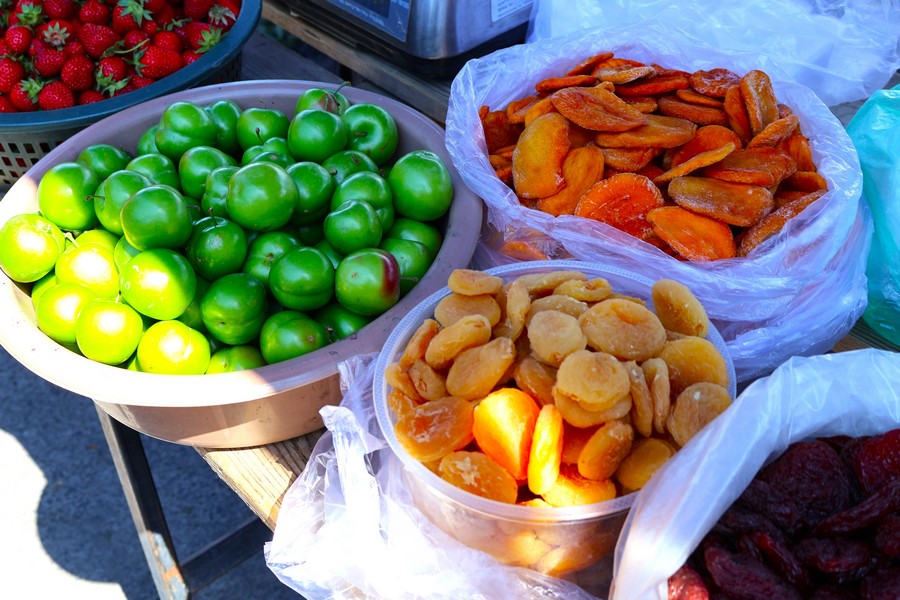
Hrazdan Stadium farmers market renovation in Yerevan was completed in June 2026 within the FAO Joint Programme “Unlocking Sustainable Finance for Nutrition-Sensitive, Climate-Smart Food Systems Transformation in Armenia.”
The work started earlier this year and has introduced a more comfortable, organized, and contemporary environment for both farmers and visitors. Farmers have been provided with new, standardized tents that allow for more structured and efficient product display and sales, while waste sorting bins have been installed to encourage environmentally responsible practices. In addition, a food waste reuse initiative is being launched, aimed at producing compost and valuable organic fertilizers, thereby introducing circular economy principles into the market’s operations.
FAO launched the first farmers market in 2013 in the city centre and it moved later to the Hrazdan Stadium. Today, the market continues to operate and expand, serving as a key platform for promoting sustainable agriculture, strengthening farmer-consumer linkages, and fostering community engagement. This initiative marked an important milestone in improving direct market access for smallholder farmers, enabling them to sell their produce without intermediaries while offering consumers fresh, locally sourced food.
Farmers’ markets, also known as fresh markets or agricultural markets, play a vital role in connecting local producers directly with consumers. These markets not only ensure access to fresh, seasonal, and nutritious food, but also support rural livelihoods, strengthen local economies, and promote more environmentally sustainable food systems. Increasingly, modern farmers’ markets are evolving into hubs of innovation, integrating principles such as the circular economy, waste reduction, and climate resilience.

“Participating in this market creates an important opportunity for farmers not only to sell their products directly but also to establish lasting relationships with consumers,” said Suren Grigoryan, a farmer selling his produced in the market. “Many of the customers I first met here continue to buy from me even during the winter months when the market is not operating. Throughout last year, I delivered ordered products to these consumers approximately every ten days. The market helps us build trust, expand our customer base, and secure sales throughout the year.”
“These efforts reflect our commitment to supporting nutrition-sensitive and climate-smart solutions that benefit both people and the environment,” said Lusine Tadevosyan, the FAO National Project Coordinator of the Joint Programme “Unlocking Sustainable Finance for Nutrition-Sensitive, Climate-Smart Food Systems Transformation in Armenia.”
The programme is funded by the UN Joint SDG Fund and implemented and co-financed by FAO, UNDP, and UNEP.
These initiatives are designed to promote the principles of a circular economy, reduce environmental impact, and ensure the long-term sustainability of farmers’ markets.
FAO