










Imagine that in 1933, when the Nazis came to power in Germany, parliamentarianism, political parties and a free press had not been abolished within a matter of months (in reality, the process lasted from January to October), but had instead taken two or three years. And imagine that, instead of fighting the Nazi dictatorship, liberals, social democrats and communists had turned against each other, accusing one another with arguments such as: “But what about what you did back then?”
Personally, I can easily imagine such a scenario in any country—especially in Armenia. If any opposition political force still does not understand what kind of regime has been established in our country and how it will develop under Pashinyan’s leadership, I would simply suggest opening their eyes a little wider.
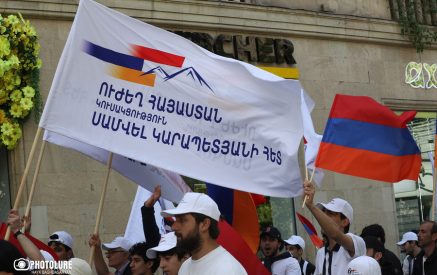
Under the scenario pursued by Civil Contract, Armenia will effectively be left with only Civil Contract itself (perhaps together with the Republic Party). In the coming months, Pashinyan will do everything possible to eliminate any meaningful opposition activity. Hundreds of new “criminal” cases will be fabricated, and there will be new arrests. In the coming years, the Armenian Apostolic Church will become a branch of Civil Contract.
But, strange as it may sound, that is not the worst part.
Read also
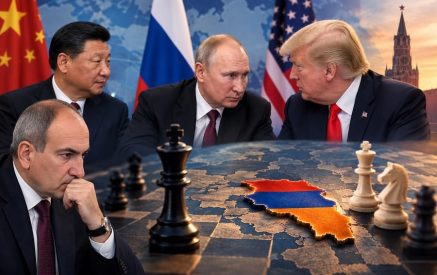
Pashinyan will not only amend the Constitution at Aliyev’s demand, but will also hand over Tigranashen (pretending, supposedly, that he is exchanging one thing for another), thereby effectively giving Azerbaijan the opportunity to cut off, at any moment, the strategic road connecting the north and south of Armenia.
Under these circumstances, some opposition figures continue to throw mud at one another, through their media outlets and personally, knowingly or unknowingly repeating the talking points of official propaganda.
This is absolutely not the time to determine who is “current” and who is “former,” who has “stolen” and who has not, who is “pro-European” and who is “pro-Russian.” If opposition forces truly want to take responsibility for the state—in other words, to stop this disastrous course—then all of these disputes must be temporarily put aside.
The leaders of the main opposition forces must meet and develop a strategy that rules out mutual attacks. Politics requires negotiations and agreements even between people who may dislike each other politically or personally.
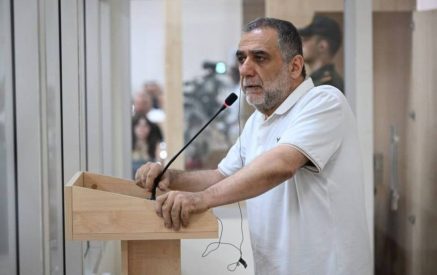
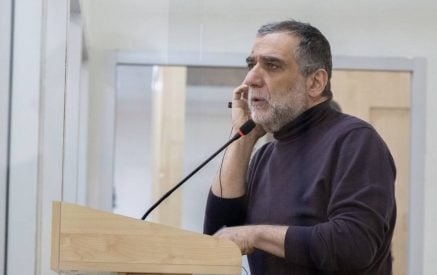
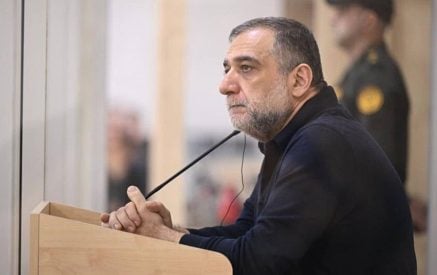
In particular, all political prisoners must be defended by all opposition forces. There should be no distinction here between “mine” and “yours.”
Aram ABRAHAMYAN
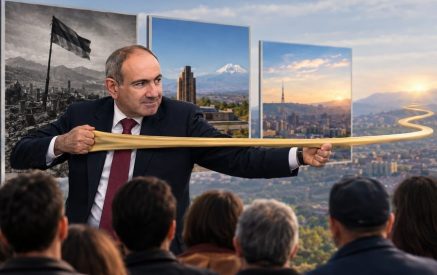
This illustration was created using artificial intelligence technology