
















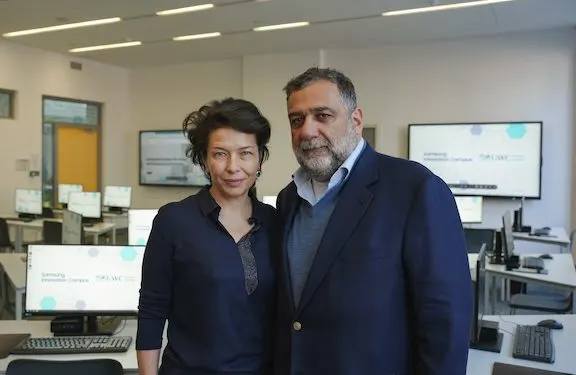
Statement by Veronika Zonabend
As part of the preparation for an international women’s humanitarian delegation to Baku to visit Armenian detainees, I have sent open letters to international and governmental bodies whose engagement may be essential to organising the visit and ensuring the safety of its participants.
The purpose of this initiative remains exclusively humanitarian: to meet with the Human Rights Commissioner of the Republic of Azerbaijan, to visit Armenian citizens held in Azerbaijan, and to deliver to them letters, photographs, and permitted personal items from their families.
This is why I believe it is important to act openly — through official and diplomatic channels.
Read also
Of particular importance is the predictability and coherence of every stage of the potential visit: entry into Azerbaijan, access to the detainees, and the safe return home of all participants. It is essential for the participants and their families to understand that this initiative is being prepared in an official framework and with the necessary guarantees, so that the visit does not pose a risk to anyone’s life or safety.
To that end, I have addressed open letters to the following:
• The Human Rights Commissioner of the Republic of Azerbaijan, Sabina Aliyeva — requesting her support in organising the visit under the auspices of her office and in creating the conditions necessary for it to take place;
• The President of the International Committee of the Red Cross, Mirjana Spoljaric Egger — requesting that the ICRC consider ways to support, advise, or participate in the visit within the scope of its mandate;
• The Prime Minister of the Republic of Armenia, Nikol Pashinyan — requesting coordination and practical support from the Government of Armenia;
• The High Representative of the European Union for Foreign Affairs and Security Policy, Kaja Kallas — requesting diplomatic attention and possible assistance from European institutions.
For those held in prolonged detention, an initiative of this kind carries profound significance. Their condition, the conditions of their detention, and their connection to their families must not be left unaddressed or left to depend solely on closed and irregular mechanisms.
This is a matter of a fundamental human right — to know what is happening to those we love, to be able to send them words of support, and to let them know they have not been forgotten.
Veronika Zonabend