




























The signing of an agreement between Iran and the United States has raised numerous questions in international affairs. The situation is such that a document which would seemingly offer grounds for optimism and hopes for peace has instead generated even more questions and doubts.
From Armenia’s perspective, the Iran–U.S. agreement naturally draws attention first and foremost to the TRIPP project, the framework agreement for which Yerevan and Washington signed just two or three days before voting in Armenia’s parliamentary elections. At the time, the move created an impression of haste. It appeared that Washington was eager to finalize the agreement before the outcome of Armenia’s parliamentary elections could alter the political landscape.
Now that the signing of an Iran–U.S. agreement has been announced, there appears to be reason to conclude that Washington’s urgency may not have stemmed from concerns about political developments in Armenia, but rather from calculations related to its negotiations with Iran. In any case, given Tehran’s harsh assessment of TRIPP—voiced as early as last December by Ali Akbar Velayati, senior adviser to Iran’s Supreme Leader, during a meeting with Armenia’s ambassador—it is beyond doubt that the Iran–U.S. negotiating process influenced, at least indirectly yet significantly, the prospects of the TRIPP project.
The impact of that process may become visible in the near future. Following announcements that the text of the Iran–U.S. agreement had been finalized and was ready for signing, Prime Minister Nikol Pashinyan declared in Yerevan that the agreement had increased the relevance of Armenia’s “Crossroads of Peace” initiative. This is a significant statement, particularly given that after the trilateral declaration on TRIPP issued in Washington on August 8, 2025, official Yerevan virtually stopped referring to the Crossroads of Peace concept.
Read also
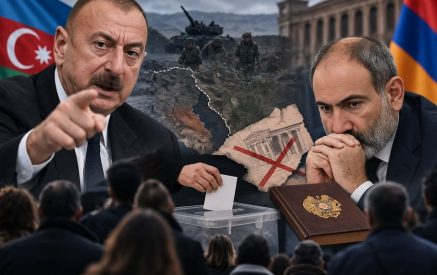
Now, in the context of the Iran–U.S. agreement, Pashinyan is speaking not about the future of TRIPP—which is backed by a framework agreement with the United States—but about the Crossroads of Peace initiative instead. The key point is that at the Munich Security Conference in February 2026, Ilham Aliyev openly mocked the initiative when it was raised by one of Armenia’s pro-government analysts.
Now that Pashinyan has “rediscovered” the Crossroads of Peace, does this reflect his hope that Iran—the country that helped steer the United States away from confrontation and toward an agreement—might also relieve him of the need to move forward with TRIPP?
Hakob BADALYAN